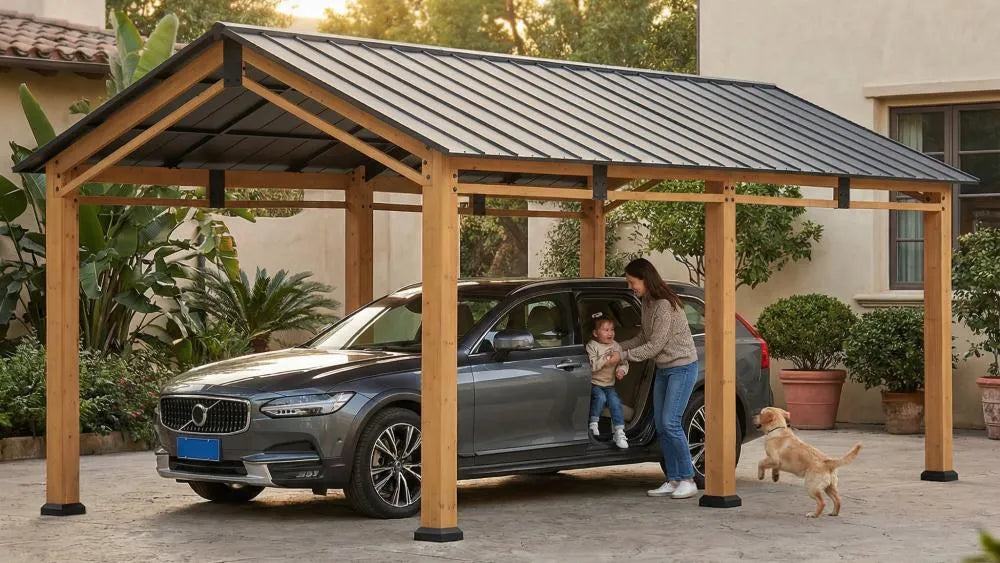
Proper anchoring is one of the most important steps when installing a carport. In regions where weather conditions can change quickly—from strong winds to heavy rain and seasonal snow—a securely anchored structure is essential for long-term safety and performance.
A well-anchored carport not only protects your vehicle but also ensures the structure remains stable and aligned over time. The SUNJOY Wooden Carport Gazebo is engineered for outdoor durability, but like all large structures, its performance depends on correct installation and secure anchoring.
This guide explains how to properly anchor a carport using practical steps, surface-specific methods, and professional installation tips.
About SUNJOY and the Wooden Carport Gazebo
SUNJOY is a trusted name in outdoor living solutions, offering a wide range of products including gazebos, pergolas, patio structures, and carports designed for residential use.
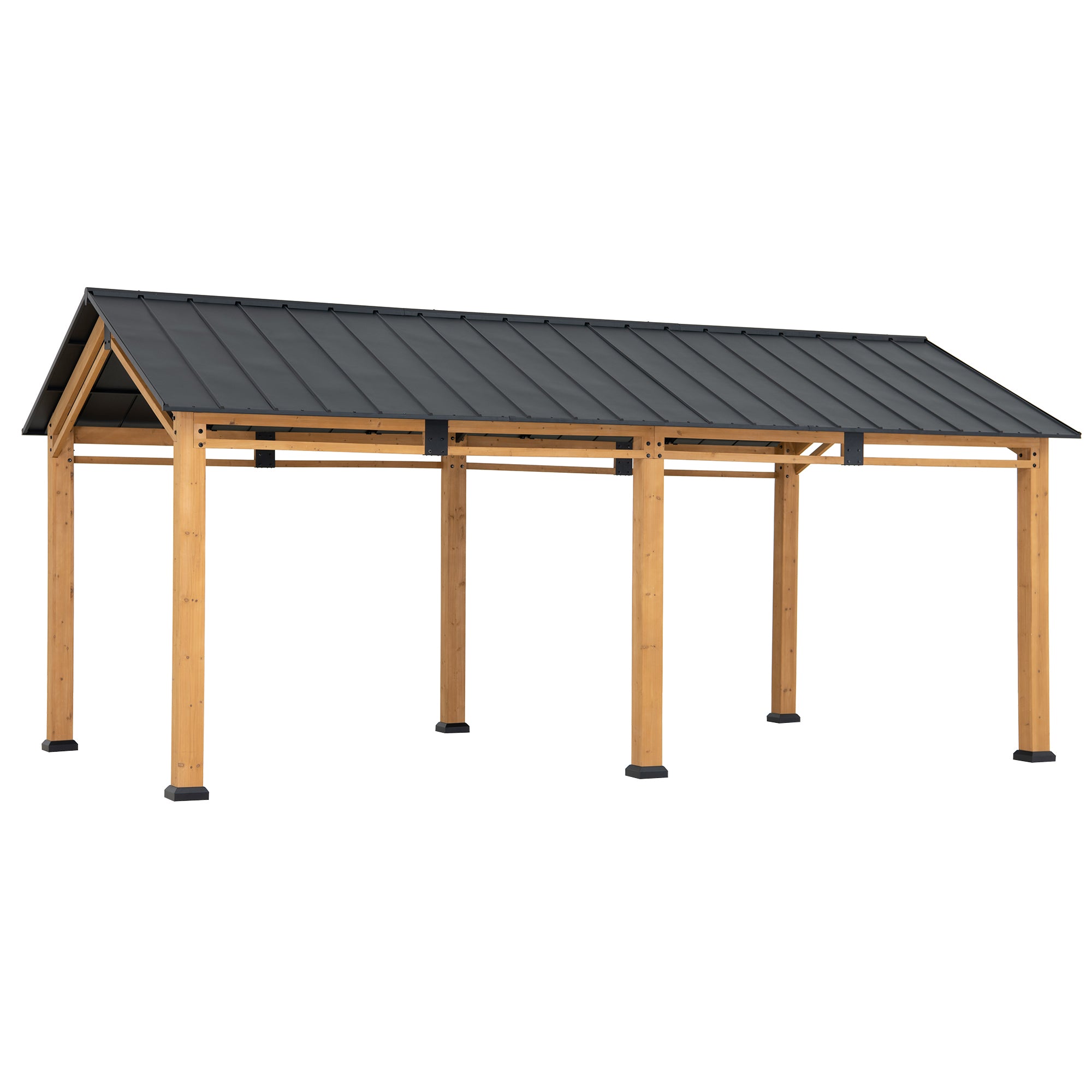
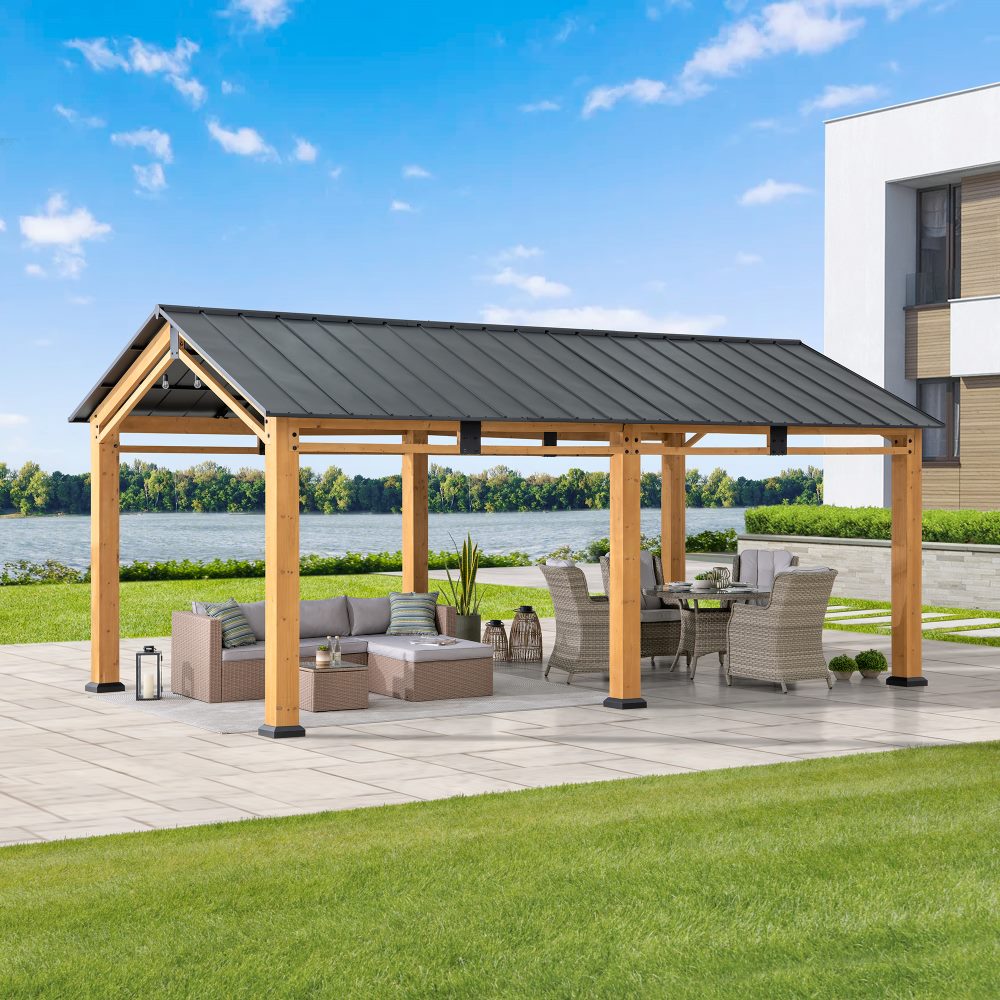
The SUNJOY Wooden Carport Gazebo features a hybrid wood-and-steel gable roof design that combines natural aesthetics with structural strength. It provides reliable overhead protection for vehicles while maintaining ventilation and visual appeal in outdoor spaces.
Key design features include:
- Reinforced base plates for secure anchoring
- Compatible installation on concrete, wood decks, or compact soil
- Weather-resistant structural materials
- Open-air design for airflow and reduced moisture buildup
However, proper anchoring is essential to ensure the structure performs safely in real outdoor conditions.
Why Proper Carport Anchoring Matters
Anchoring is not an optional step—it is a core safety requirement for any outdoor structure.
A correctly anchored carport helps:
- Prevent shifting or movement during high winds
- Reduce risk of tipping or structural instability
- Maintain alignment of roof panels and support posts
- Improve resistance against snow and rain loads
- Protect vehicles and surrounding property
- Extend the overall lifespan of the structure
Without proper anchoring, even a high-quality carport may gradually become unstable due to ground movement or repeated exposure to weather conditions.
Types of Carport Anchoring Systems
Different surfaces require different anchoring methods. Choosing the right system ensures maximum stability and long-term durability.
1. Concrete Anchoring (Most Stable Option)
Concrete provides the strongest foundation for carport installation.
Common hardware includes:
- Expansion anchors
- Wedge anchors
These create a secure mechanical hold by locking into drilled holes in concrete surfaces.
Best for:
- Driveways
- Garage-adjacent installations
- Permanent structures
2. Wooden Surface Anchoring
Recommended hardware:
- Lag bolts
- Structural wood screws
Important:
Anchors must reach underlying beams, not just surface boards.
Best for:
- Elevated decks
- Wooden platforms
- Attached outdoor structures
3. Soil or Ground Anchoring
For compact soil installations, auger-style anchors or heavy-duty stakes are commonly used.
Best practices:
- Use dense, well-compacted soil whenever possible
- Drive anchors deep enough to resist pull-out force
- Add gravel base layers for improved stability
Best for:
- Garden installations
- Temporary setups
- Non-concrete areas
Step-by-Step Guide to Anchoring a Carport
Installing and anchoring a structure like the SUNJOY 11x13 Wooden Carport requires precision and preparation. For deck or platform installations, anchoring must connect directly to structural framing.
Step 1: Position the Structure
Place the carport frame in the intended location.
Ensure:
- The frame is square
- All sides are level
- Placement allows proper vehicle clearance
Use a spirit level to confirm alignment before proceeding.
Step 2: Mark Anchor Points
Identify the base plate positions on each support post.
Mark all drilling or insertion points carefully to ensure:
- Even weight distribution
- Proper structural balance
- Accurate alignment during installation
Step 3: Prepare Tools and Drill Holes
Surface-specific preparation is required:
-
Concrete: Drill masonry holes at marked points
-
Wood: Pre-drill to prevent splitting
-
Soil: Prepare anchor insertion points using a driving tool
Step 4: Install Anchors
Secure the structure using appropriate hardware:
- Concrete → insert expansion anchors and tighten firmly
- Wood → drive lag bolts into structural beams
- Soil → install auger anchors until fully resistant
Ensure even tightening across all points to prevent uneven stress.
Step 5: Recheck Alignment
Before final tightening:
- Confirm posts are vertical
- Check spacing consistency
- Adjust alignment if necessary
This step ensures long-term structural balance.
Step 6: Final Tightening and Inspection
Fully tighten all anchor points.
Perform a stability check:
- Apply light pressure to posts
- Confirm no movement at base plates
- Verify all hardware is secure

Surface-Specific Installation Tips
Concrete Surfaces
- Use outdoor-rated anchors only
- Clean drilled holes before installation
- Avoid over-tightening to prevent cracking
Wooden Decks
- Always anchor into structural beams
- Use corrosion-resistant fasteners
- Confirm load capacity of the deck before installation
Soil Installations
- Prefer compact, stable soil areas
- Increase anchor depth in loose ground
- Add gravel for drainage and stability
Common Installation Mistakes to Avoid
Many anchoring issues come from simple mistakes:
- Installing on uneven ground
- Using anchors that are too short
- Skipping pre-drilling for wood surfaces
- Uneven tightening across posts
- Ignoring soil stability conditions
Each of these can reduce structural performance and shorten the lifespan of the carport.
Maintenance After Anchoring
Even a properly installed carport requires periodic inspection.
Recommended maintenance:
- Check anchors every few months
- Tighten any loose bolts
- Inspect after heavy rain or snow
- Clean debris around base plates
- Reassess alignment after extreme weather
Routine maintenance ensures long-term safety and performance.
Conclusion
Anchoring a carport correctly is essential for ensuring safety, durability, and long-term stability. The SUNJOY Wooden Carport Gazebo is designed for strong outdoor performance, but its reliability depends on proper installation practices.
By selecting the right anchoring method, following structured installation steps, and performing regular maintenance, homeowners can ensure their carport remains secure and weather-resistant in all conditions.