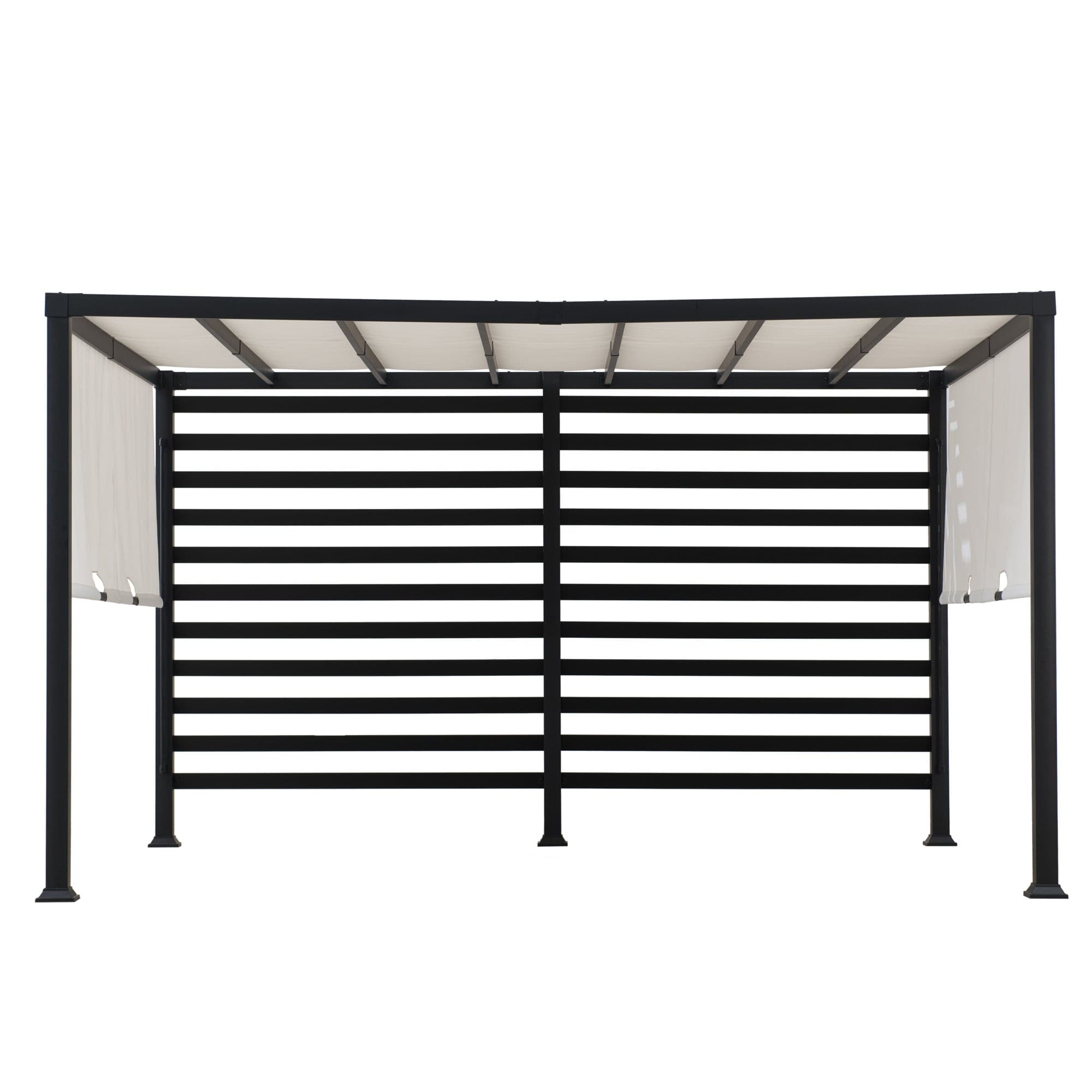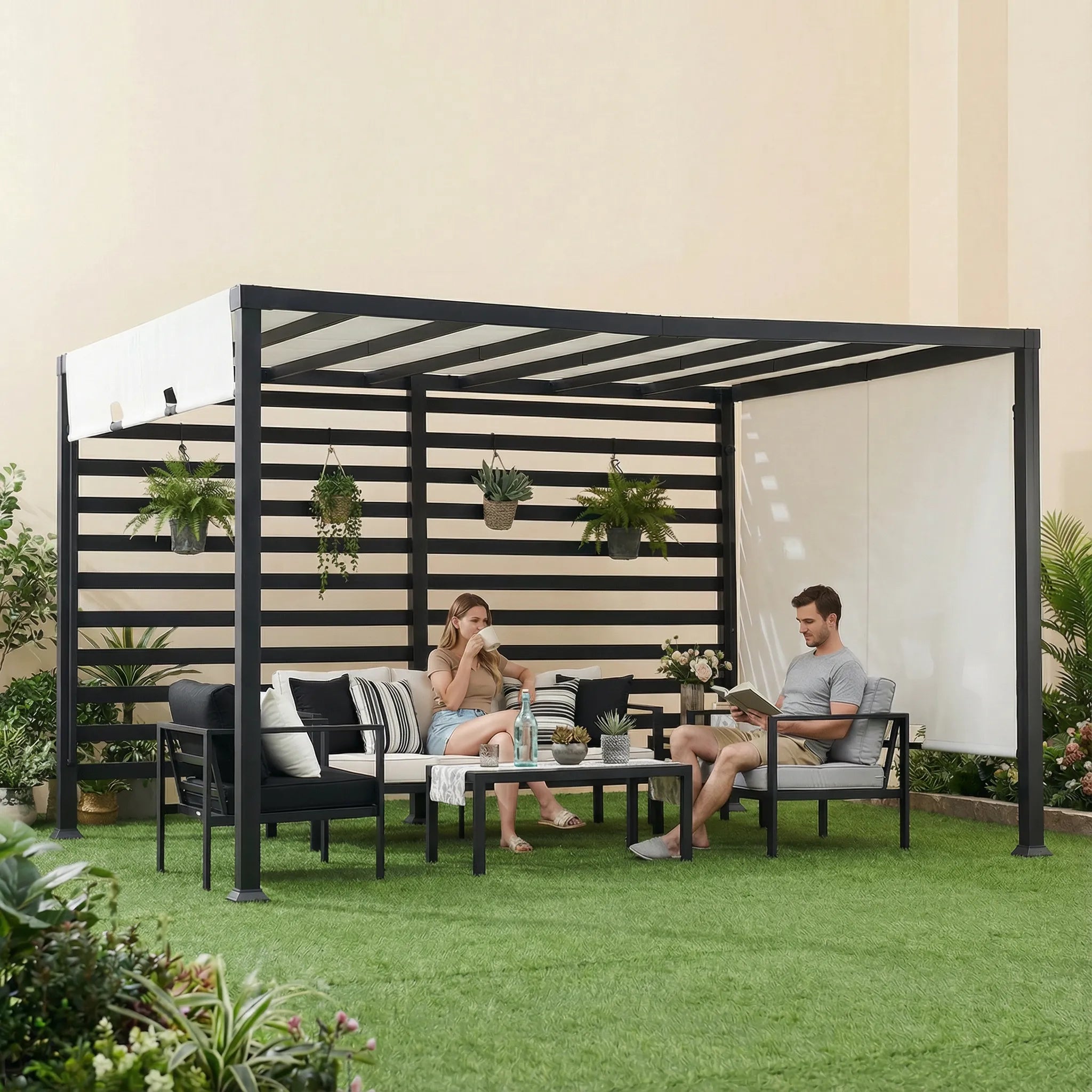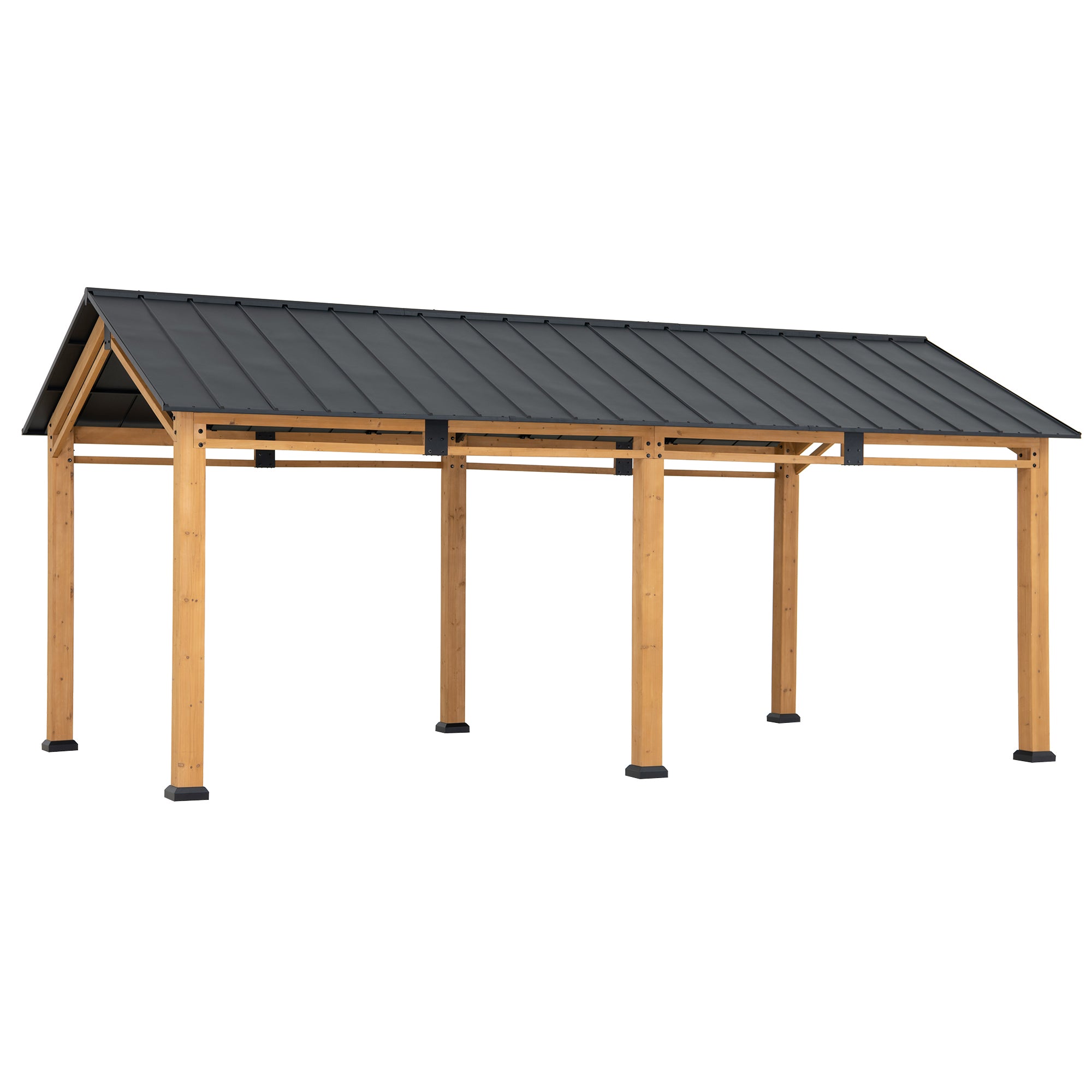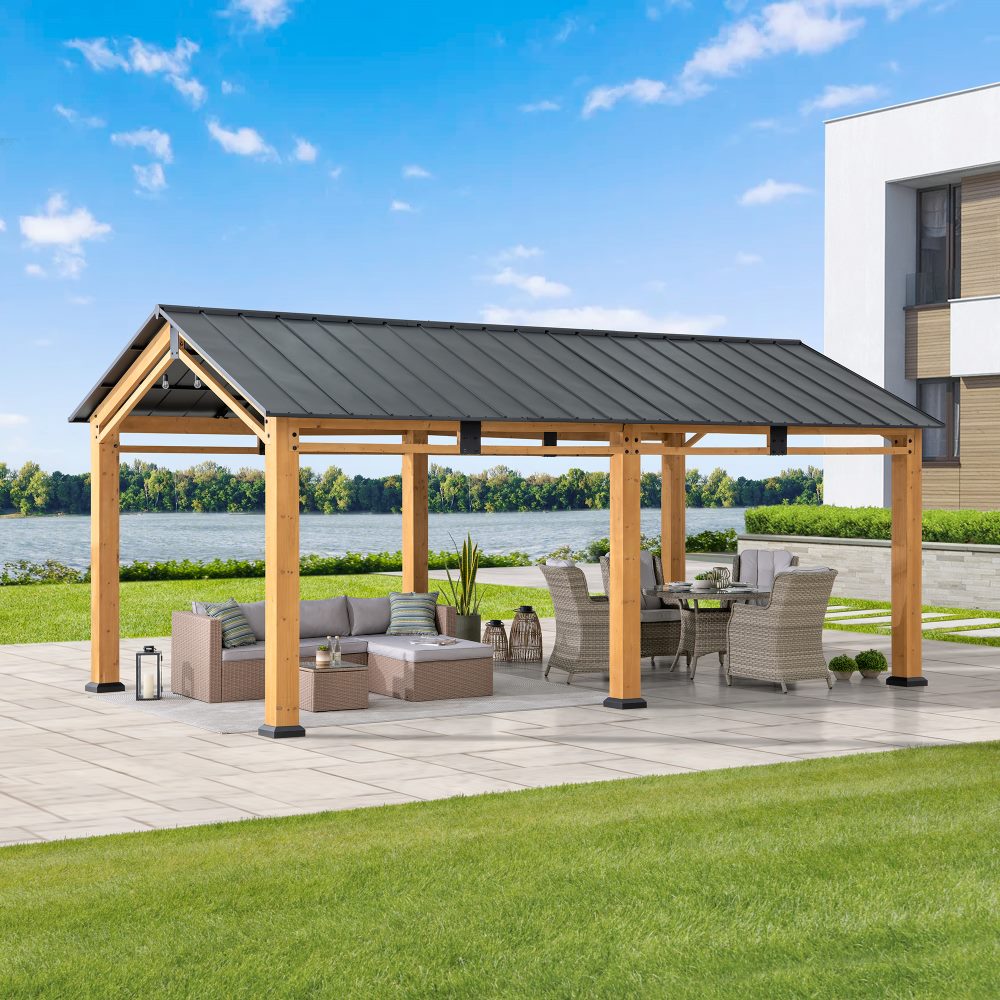
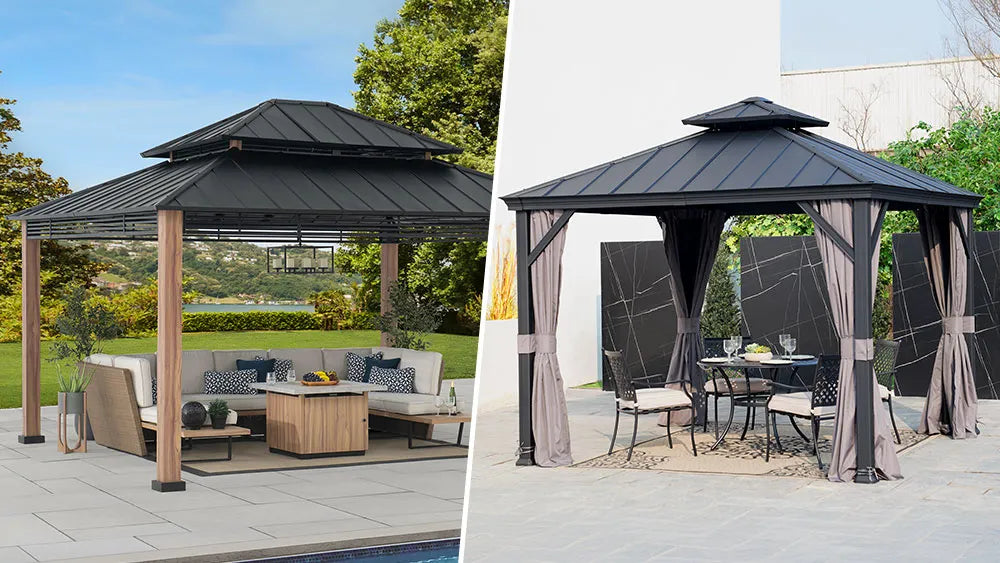
Choosing a gazebo is not just a design decision—it’s a durability decision. A gazebo becomes a long-term outdoor structure that must endure weather, temperature swings, moisture, and time. For homeowners trying to decide between a steel gazebo and an aluminum gazebo, the question usually comes down to one core concern:
Which one lasts longer under real-world outdoor conditions?
To answer this, we need to compare the materials themselves—their physical properties, weather performance, maintenance needs, and long-term cost. And because this article is written with Canadian buyers in mind, we’ll also focus on how each material performs in cold winters, high humidity, coastal regions, and windy environments.
1. Why Material Matters More Than Any Other Feature
A gazebo’s durability depends first on the material of its frame and roof. Everything else—style, curtains, accessories—can be replaced over time. But the structure itself must stand strong for many years.
Both steel and aluminum are considered weather-resistant materials, but they are not identical. Each has strengths that make it better suited for specific climates and usage patterns.
To determine which offers better gazebo durability, we break down how the two materials behave in real outdoor conditions.
2. Steel Gazebo: Strength, Stability & Long-Term Structural Integrity
A steel gazebo is known for its strength and rigidity. Steel has the highest tensile strength of all common gazebo metals, making it excellent for heavy loads and structural stability.
A. Material Characteristics
- Significantly stronger than aluminum
- Resistant to bending or deformation
- Excellent load-bearing capacity
- Heavier, meaning better wind performance
Steel gazebos often feel “solid” because the weight creates natural anchoring, reducing movement during storms.
B. Weather Performance
Steel gazebos perform exceptionally well in rugged environments such as:
1. Heavy Snowfall
The weight and rigidity of steel allow it to support higher snow loads. This is essential in areas where winter accumulation can reach several inches or more.
2. High Winds
A heavier structure resists lift and sway, improving long-term stability.
3. Hot Summers
Powder-coated steel resists UV fading, warping, and structural expansion.
C. Maintenance Needs
Steel requires protective coating, such as:
- Powder coating
- Galvanization
These prevent surface corrosion and ensure long-term performance. With proper coating, steel lasts for many years with minimal maintenance.
D. Ideal Regions for Steel Gazebos (Especially in Canada)
Steel gazebos suit homeowners in:
- Snow-heavy provinces (Ontario, Québec, Alberta)
- Wind-prone coastal areas (Atlantic Canada)
- Mountain regions
- Open rural areas with less natural windbreak
If you experience strong winters or unpredictable weather, a steel gazebo provides the structural confidence you need.
3. Aluminum Gazebo: Lightweight, Rustproof & Modern Performance
An aluminum gazebo offers different advantages. Although lighter, aluminum is naturally rustproof and easier to maintain.
A. Material Characteristics
- Lightweight, easier to transport and assemble
- Naturally resistant to corrosion
- Highly workable for detailed designs
- Does not warp or swell with moisture
Aluminum gazebos often look sleek and modern because aluminum lends itself well to clean lines.
B. Weather Performance
While not as heavy-duty as steel, aluminum provides excellent durability in:
1. Humid Environments
Because aluminum doesn’t rust, it performs exceptionally well in high-moisture areas.
2. Coastal Regions
Salt air causes steel to corrode faster without proper coating. Aluminum remains stable.
3. Regions with Mild to Moderate Snow
Aluminum roofs can still support snow, but generally less weight than steel.
C. Maintenance Needs
Aluminum is among the lowest-maintenance outdoor materials:
No rust
No annual sealing
Easy to clean
Powder coating lasts for many seasons
This makes aluminum gazebos great for homeowners wanting easy upkeep.
D. Ideal Regions for Aluminum Gazebos
Aluminum gazebos are ideal for:
- Coastal British Columbia (wet winters, moderate snow)
- Urban areas with mild weather variations
- Backyards where corrosion is a concern
- Homeowners who prefer minimal maintenance
If your priority is rust-proof durability and effortless care, aluminum is an excellent choice.
4. Steel vs Aluminum: Direct Comparison Table
|
Feature |
Steel Gazebo |
Aluminum Gazebo |
|
Strength |
★★★★★ |
★★★★☆ |
|
Rust Resistance |
★★★★☆ (with coating) |
★★★★★ (natural) |
|
Weight |
Heavy |
Light |
|
Wind Resistance |
Higher (more stable) |
Moderate |
|
Snow Load |
Higher |
Moderate |
|
Maintenance |
Low |
Very low |
|
Cost |
Moderate to high |
Moderate |
|
Ideal Climate |
Snow areas / windy regions |
Humid / coastal regions |
|
Assembly |
Heavier, stable |
Lighter, easier |
5. Real Examples of Material Performance
Understanding the materials is helpful, but examples reflect real results.
Example 1: Steel Gazebo in Cold Regions
A powder-coated steel hardtop gazebo performs incredibly well through:
- Freeze-thaw cycles
- Snow accumulation
- Wind storms
- Cold-temperature brittleness issues (rare in steel)
Steel is the preferred material for permanent backyard installations where year-round use is expected.
Example 2: Aluminum Gazebo in Humid Regions
An aluminum-framed gazebo with polycarbonate roofing excels where:
- Moisture is constant
- Rust exposure is high
- Winters are mild
Homeowners want stylish, low-maintenance performance
Aluminum gazebos deliver durability without the risk of oxidation.
6. Which Gazebo Material Is More Durable Overall?
Durability depends on your environment, but in pure material terms:
Steel = Highest structural durability
Aluminum = Highest corrosion resistance durability
For Canadian climates—which vary drastically—choosing based on your regional weather is the key to maximizing gazebo durability.
7. Which One Should You Choose? (Canada-Focused Recommendations)
Choose a Steel Gazebo If You Live In:
- Ontario
- Québec
- Alberta
- Saskatchewan
- Northern regions
- Mountain areas
Anywhere with heavy snow or strong wind
Why?
You need load-bearing strength and structural stability.
Choose an Aluminum Gazebo If You Live In:
- British Columbia (coastal)
- Atlantic provinces
- Urban areas with mild winters
- Homes near lakes/regional humidity
Why?
You need rustproof materials and low maintenance.
8. Final Verdict: Steel vs Aluminum — Both Durable, But in Different Ways
The question isn’t which material is universally “better.”
The real question is:
Which material performs better in YOUR climate?
Steel Gazebo = Best for strength
Heavy snow, strong wind, long-term structural confidence.
Aluminum Gazebo = Best for corrosion protection
Humid, coastal, or rainfall-heavy environments.
Choosing the right gazebo material ensures your outdoor structure lasts not just one season—but many years of enjoyment.
Both steel and aluminum can be extraordinarily durable when engineered with proper coatings, roofing systems, and construction quality—as seen in SUNJOY’s collection of weather-resistant gazebos.
With the right choice, your gazebo becomes a true long-term investment in outdoor living.