Fire pits have become one of the most popular backyard upgrades for homeowners who want to create warm, inviting outdoor spaces. But choosing between a wood fire pit and a gas fire pit can feel overwhelming. Both offer unique advantages, and the better choice depends on your priorities: ambience, convenience, heat output, maintenance, or cost.
This guide provides a clear, technical, and practical comparison between wood and gas fire pits, helping you decide which option fits your outdoor lifestyle. You’ll also find answers to real homeowner questions and a curated selection of SUNJOY fire pits covering both fuel types.
Conclusion First: Wood Gives Atmosphere; Gas Gives Convenience
If you want natural flames, crackling sounds, and high heat, choose wood.
If you want instant ignition, low maintenance, and clean burning, choose gas.
The sections below break down each factor with more detail.
1. Heat Output: Wood Burns Hotter
Wood fire pits typically deliver higher radiant heat than standard gas burners. Hardwood logs burn hotter and create a wide heat radius, which is ideal for chilly evenings or larger outdoor seating areas.
Wood Fire Pit Heat Advantages
- Strong radiant warmth
- Suitable for open landscapes
- Flames grow naturally with added fuel
Gas Fire Pit Heat Advantages
Gas fire pits offer consistent, steady heat with adjustable flame height. While BTUs vary, gas units tend to provide a more predictable heating experience.
2. Ambience & Flame Quality: Wood Fire Pits Win
For homeowners who enjoy:
- Crackling sounds
- Shifting flame patterns
- Natural wood scent
- Glowing embers
…a wood fire pit creates unmatched ambience.
Gas flames are visually appealing but lack the sensory depth of natural burning wood.
3. Convenience & Ease of Use: Gas Fire Pits Lead
Gas units require:
- No wood
- No ash cleanup
- No smoke management
- No tending of the fire
With one-click ignition, they’re perfect for quick evening gatherings.
Wood fire pits require:
- Dry, seasoned wood
- Fire tending
- Ash disposal
- More setup time
If you value low-effort outdoor heating, gas is the better choice.
4. Maintenance: Wood Requires More Care
|
Feature |
Wood Fire Pit |
Gas Fire Pit |
|
Daily cleanup |
Ash removal required |
Minimal cleanup |
|
Fuel storage |
Wood must be kept dry |
Propane tanks / gas lines |
|
Burner components |
N/A |
Needs occasional inspection |
|
Long-term durability |
Depends on steel thickness |
Depends on burner + housing |
Wood demands more hands-on care, while gas is largely maintenance-free.
5. Cost: Wood Fire Pits Are Usually More Affordable
Upfront Cost
Wood models tend to cost less because they don’t include burners, valves, or gas systems.
Operating Cost
Wood cost varies depending on season and type.
Gas cost stays more predictable over time.
Overall:
Wood = lower upfront
Gas = more predictable long-term operating cost
6. Safety: Gas Is More Controlled; Wood Is More Variable
Gas Fire Pit Safety Advantages:
- Controlled flame
- No sparks
- Low smoke
- Easy shutdown
Wood Fire Pit Safety Considerations:
- Sparks and embers
- Residual heat in ashes
- Flame unpredictability
For homes with wind, children, or landscaped areas, gas may offer a safer experience.
7. Environmental Impact: Gas Burns Cleaner, Wood Feels More Natural
Gas produces fewer particulates and burns cleanly.
Wood is natural and renewable but emits smoke and particulates.
Real Homeowner FAQ
FAQ 1: Which fire pit heats a larger area?
A wood fire pit generates stronger radiant heat and warms a wider seating zone.
FAQ 2: Is cooking easier on wood or gas?
Wood is better for open-flame cooking.
Gas units are not designed for direct food contact unless specified. 
FAQ 3: Which fire pit lasts longer?
Durability depends on materials:
Thick-gauge steel wood fire pits last many years with proper care.
Gas units last as long as burners and ignition components remain clean and stable.
FAQ 4: Which is more suitable for small patios?
Gas fire pits work better in compact areas due to controlled flame and limited smoke.
FAQ 5: Are wood fire pits harder to maintain?
Yes. They require ash removal, airflow management, and wood storage.
SUNJOY Fire Pit Recommendations
Each SUNJOY fire pit represents a different style, function, and fuel type. These options help illustrate how wood and gas fire pits perform in different backyard settings.
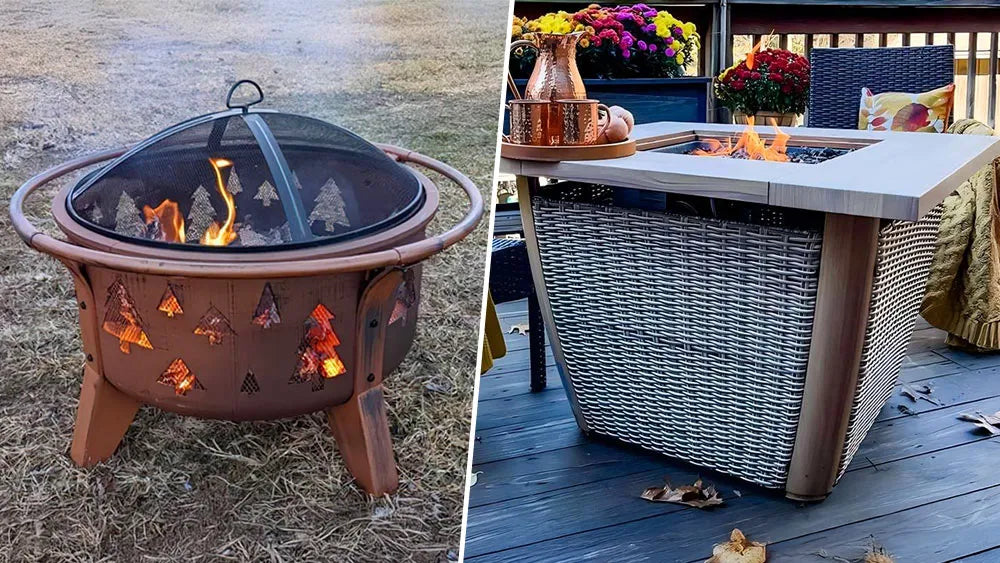
1. SUNJOY 28-Inch Steel Wood-Burning Fire Pit with Mesh Cover
A compact wood-burning model offering strong heat output, ideal for intimate seating areas. The mesh cover helps manage sparks while maintaining airflow for clean burning.
2. SUNJOY 57-Inch 2-in-1 Chiminea Fire Pit & Grill
This tall chiminea offers excellent smoke direction and includes a removable grill mesh for open-flame cooking. A great choice for homeowners wanting both warmth and functionality.
3. SUNJOY 10-Inch Smokeless Tabletop Propane Fire Pit
A portable, low-smoke propane unit perfect for outdoor dining or small patios. Two adjustable flame settings allow users to fine-tune heat and ambience.
4. SUNJOY 40-Inch Outdoor Propane Fire Pit Table with Lava Rocks
An elegant, spacious propane fire table providing clean, consistent heat. Lava rocks help distribute the flame evenly, making it ideal for outdoor lounges or patio gatherings.
Comparison Table: Wood vs Gas
|
Feature |
Wood Fire Pit |
Gas Fire Pit |
SUNJOY Examples |
|
Heat Output |
Very high |
Moderate–high |
28" Wood Pit / 40" Propane Table |
|
Ambience |
Most natural |
Clean and steady |
Chiminea (hybrid) |
|
Convenience |
Lower |
Very high |
10" Smokeless Propane |
|
Cooking |
Excellent |
Limited |
Chiminea with grill |
|
Smoke |
High |
Low |
Gas models |
|
Maintenance |
Higher |
Lower |
All SUNJOY models designed for ease |