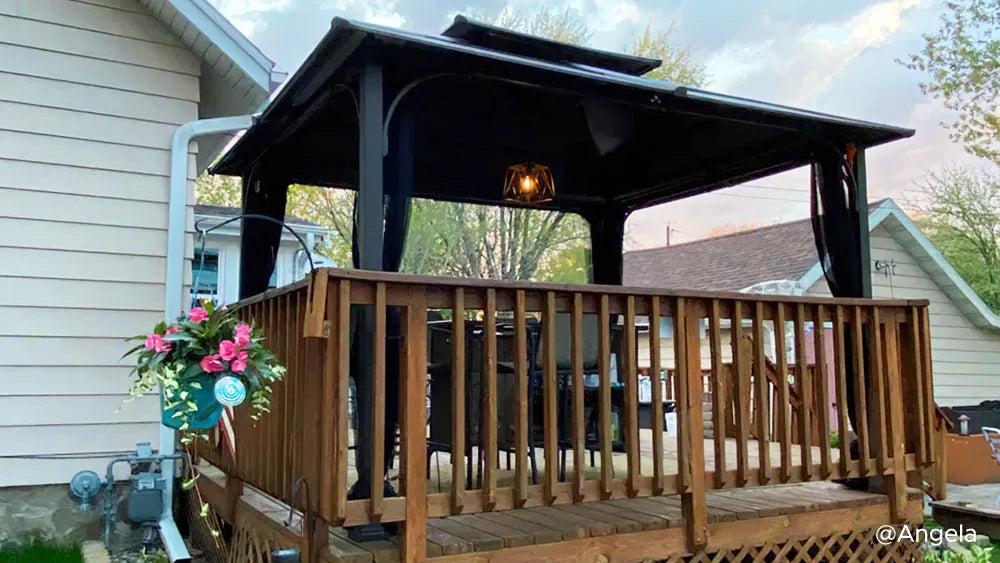
Composite decks are increasingly popular across Canada for one simple reason: they look great and require far less maintenance than traditional wood. As more homeowners upgrade their decks, a common follow-up question appears in searches and renovation planning:
Can you put a gazebo on a composite deck?
The short answer is yes—but only if it’s done correctly.
Composite decking behaves very differently from concrete or solid wood. Installing a gazebo without understanding load paths, anchoring requirements, and structural limits can lead to deck damage, instability, or long-term safety issues.
This guide explains when a gazebo can safely be installed on a composite deck, when it cannot, and what structural checks must be done first—using real-world data, installation logic, and practical examples relevant to Canadian conditions.
Clear Conclusion First: Is a Composite Deck Strong Enough for a Gazebo?
A gazebo should never be supported by composite deck boards alone.
A gazebo can be installed on a composite deck only if the load is transferred directly to the deck’s structural framing or footings below.
Composite boards are designed for foot traffic—not concentrated structural loads.
Why Composite Decking Changes the Rules
Composite decking is a surface material, not a structural one.
Typical Composite Board Limits
- Designed for distributed loads (people, furniture)
- Not designed for point loads from posts
- Can compress or deform under sustained weight
Engineering data from decking manufacturers shows that composite boards can permanently deform when exposed to concentrated loads exceeding their design limits—even if they appear intact at first.
This is why gazebo posts must never be anchored only to the deck surface.
FAQ: Can You Screw a Gazebo Directly Into Composite Deck Boards?
No.
Fastening gazebo posts only into composite boards does not provide:
- Adequate pull-out resistance
- Long-term stability
- Wind uplift protection
Over time, movement and compression can loosen anchors and compromise safety.
How Gazebo Loads Should Be Transferred
A gazebo creates vertical load, lateral load, and uplift forces.
To safely install a gazebo on a composite deck, loads must be transferred to:
- Deck joists
- Beams
- Or concrete footings below the deck
This typically requires:
- Blocking between joists
- Through-bolting into framing
- Post bases designed for structural attachment
Canadian Climate Considerations
In Canada, additional factors matter:
- Snow accumulation increases vertical load
- Freeze–thaw cycles affect fasteners
- Wind uplift can be significant during storms
Gazebos used year-round must account for these forces—not just fair-weather conditions.
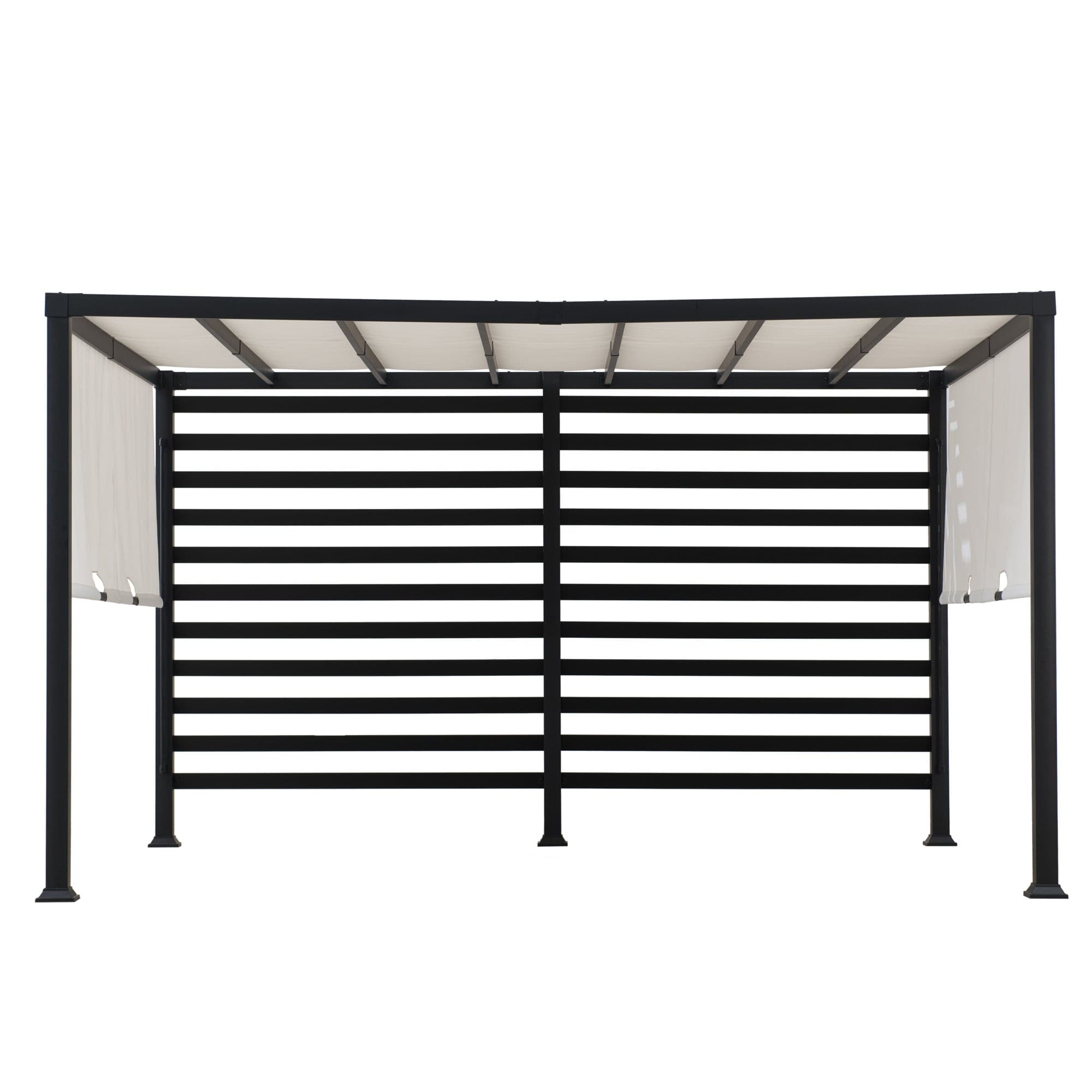
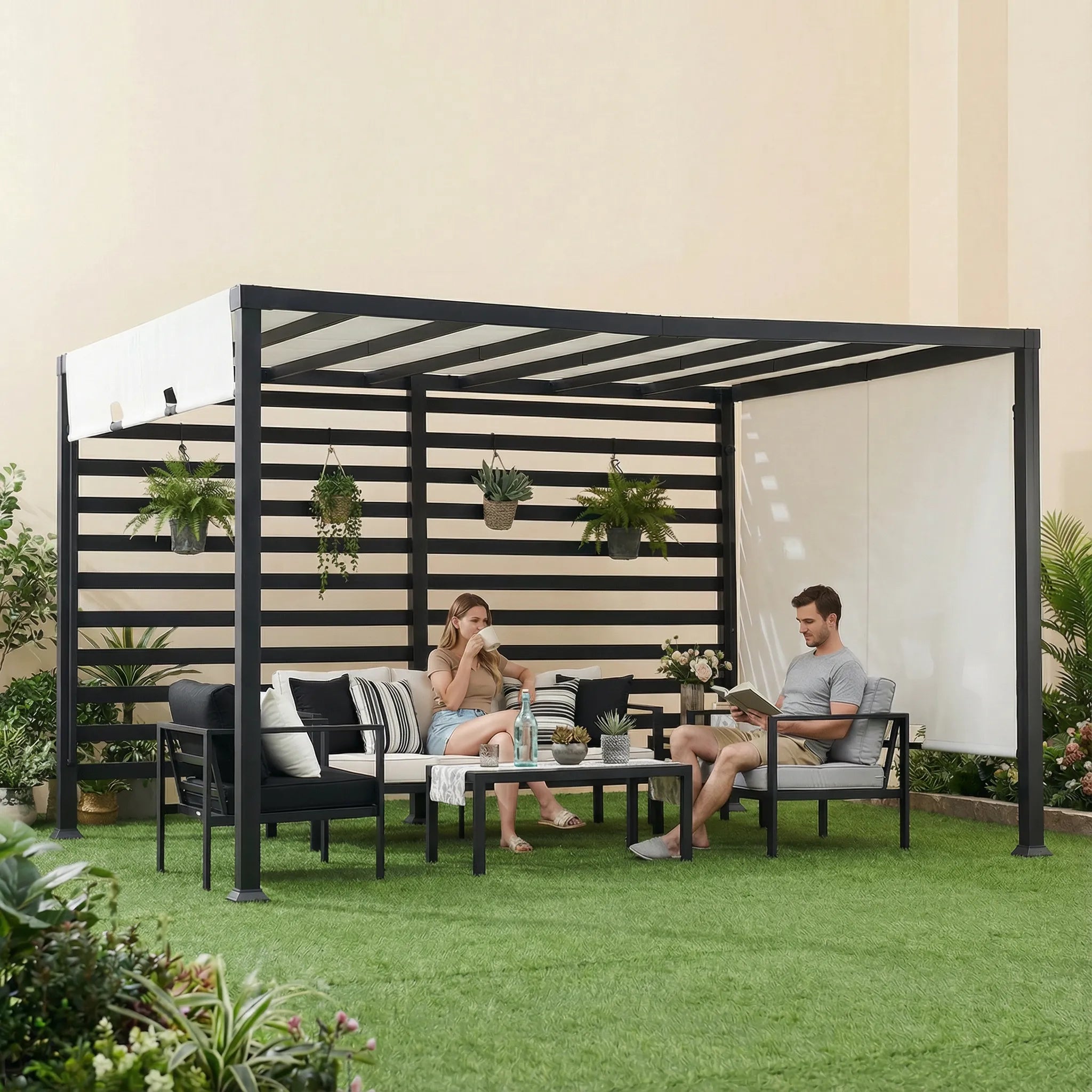
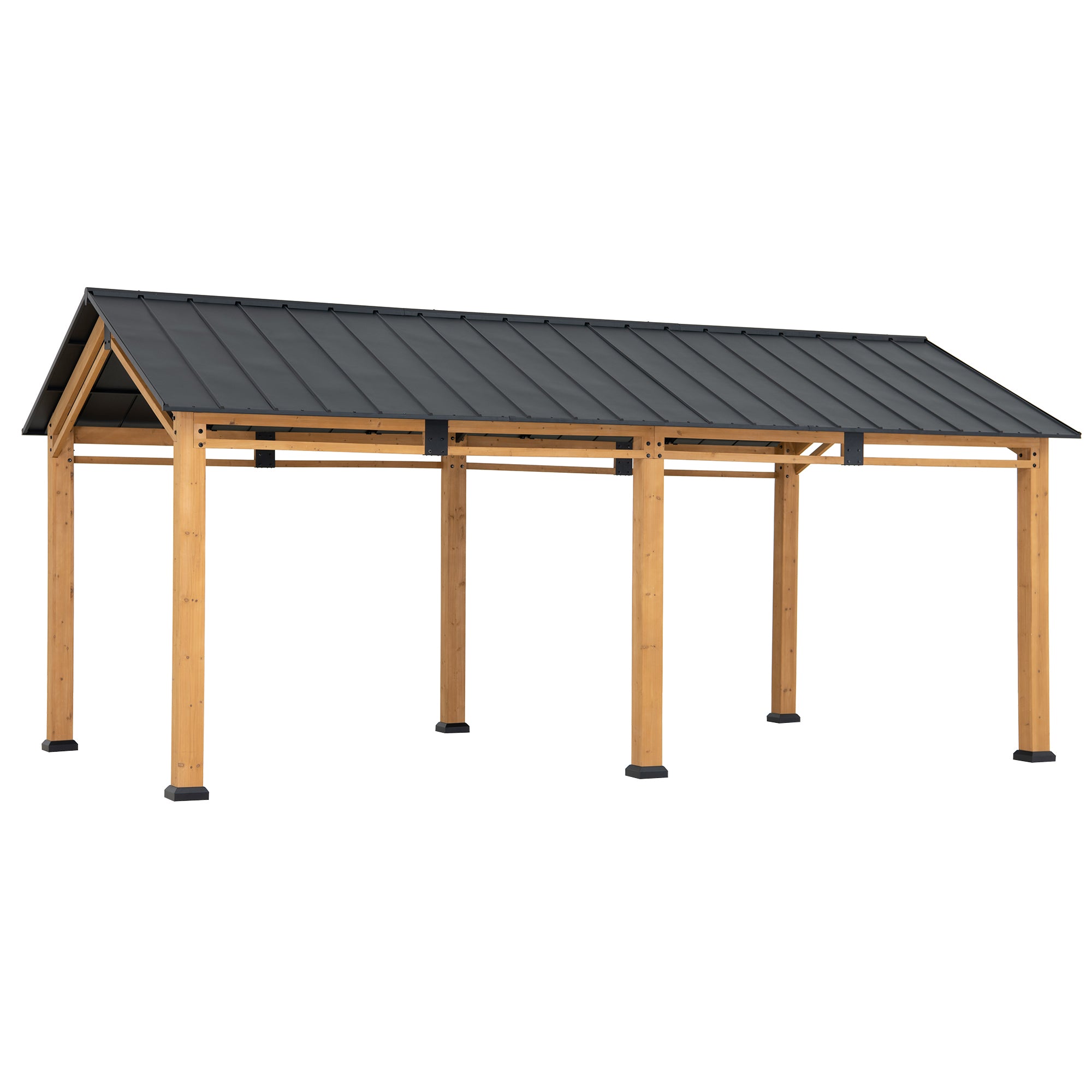
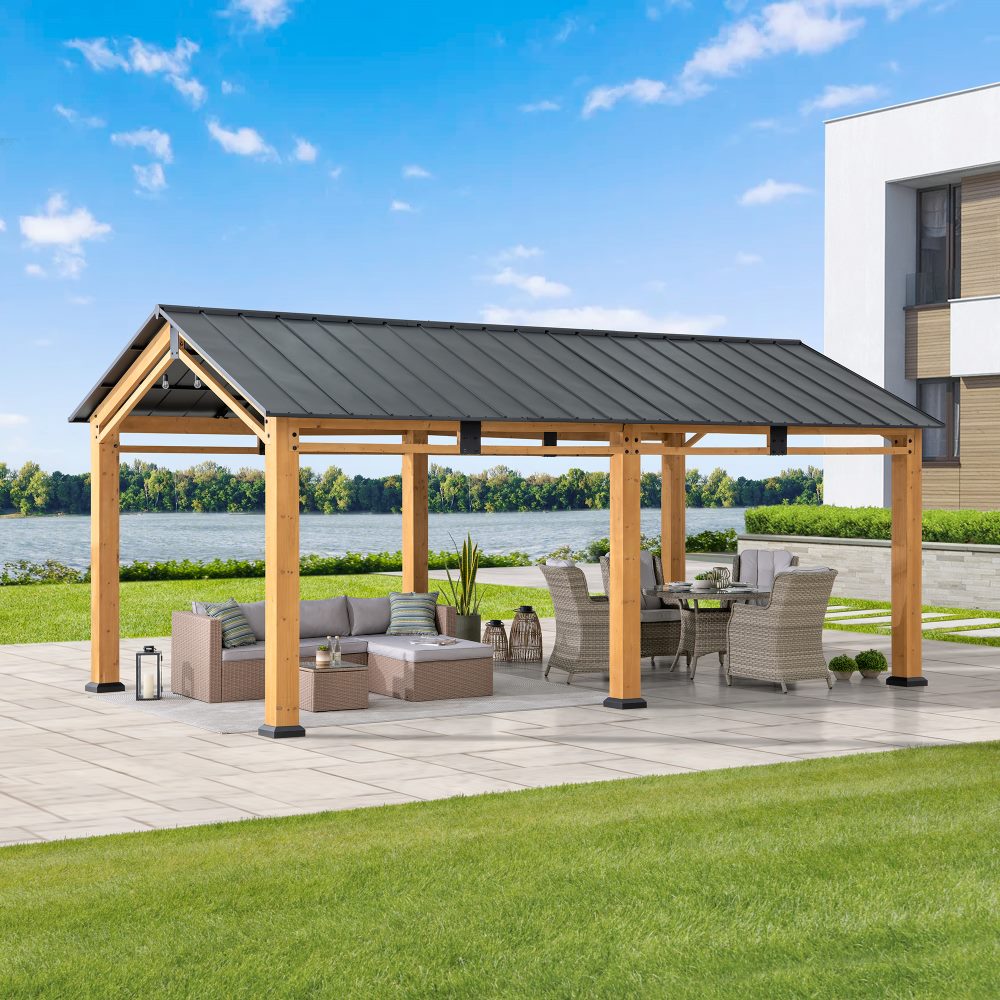
This is why many homeowners prefer engineered gazebo kits, such as those from SUNJOY, which clearly define post placement, anchoring requirements, and structural load paths.
When a Gazebo Is a Good Fit for a Composite Deck
A gazebo can be installed on a composite deck if:
The deck was built to code with proper joist spacing
Posts can be anchored into framing or footings
The gazebo’s weight and footprint are known
Anchoring hardware is rated for outdoor structural use
In these cases, a gazebo becomes an extension of the deck rather than a risk.
When You Should Not Install a Gazebo on a Composite Deck
Avoid installation if:
The deck is floating without footings
Joists are undersized or poorly spaced
You cannot access framing for anchoring
The gazebo is large and heavy with no structural reinforcement
In these cases, installing the gazebo adjacent to the deck on concrete or ground footings is often safer.
Real-World Example: Deck Damage vs Proper Installation
A homeowner installed a gazebo by anchoring posts directly to composite boards. Within two seasons:
- Boards showed compression marks
- Fasteners loosened
- The structure shifted during high winds
In contrast, a similar gazebo installed using through-bolted post bases tied into deck beams remained stable after multiple winters.
The difference was not the gazebo—it was the load path.
FAQ: Do I Need a Permit to Put a Gazebo on a Deck in Canada?
Requirements vary by municipality. However:
Permanent structures often require permits
Load-bearing installations may trigger inspections
Always verify local building codes before installation.
SUNJOY Gazebo Design Considerations for Deck Installations
SUNJOY gazebos are designed with:
- Defined post locations
- Engineered frame geometry
- Clear anchoring guidance
This makes it easier for homeowners and contractors to plan safe deck installations without guesswork.
Comparison: Deck Surface vs Structural Anchoring
|
Installation Method |
Safety |
Long-Term Stability |
|
Anchored to composite boards |
Low |
Poor |
|
Anchored to joists/beams |
High |
Strong |
|
Anchored to concrete footings |
Very High |
Excellent |
This comparison highlights why how you anchor matters more than where you place the gazebo.
FAQ: Can a Composite Deck Support a Hardtop Gazebo?
Yes—if the deck structure below is designed to handle the load. Hardtop gazebos are heavier and require more robust anchoring than soft-top designs.
A Simple Decision Checklist
Before installing a gazebo on a composite deck, ask:
- Can I anchor into framing or footings?
- Is the deck built to code?
- Does the gazebo have defined post loads?
- Have I accounted for snow and wind?
If any answer is unclear, consult a professional before proceeding.
Final Verdict: It’s Not About the Decking—It’s About the Structure
You can put a gazebo on a composite deck—but only when the deck structure below is doing the work.
Composite boards are a finish layer, not a foundation. When load paths are properly planned, a gazebo becomes a safe and valuable extension of your outdoor space.
Choosing an engineered solution—such as a SUNJOY gazebo—and installing it with proper anchoring ensures safety, longevity, and peace of mind in Canadian conditions.