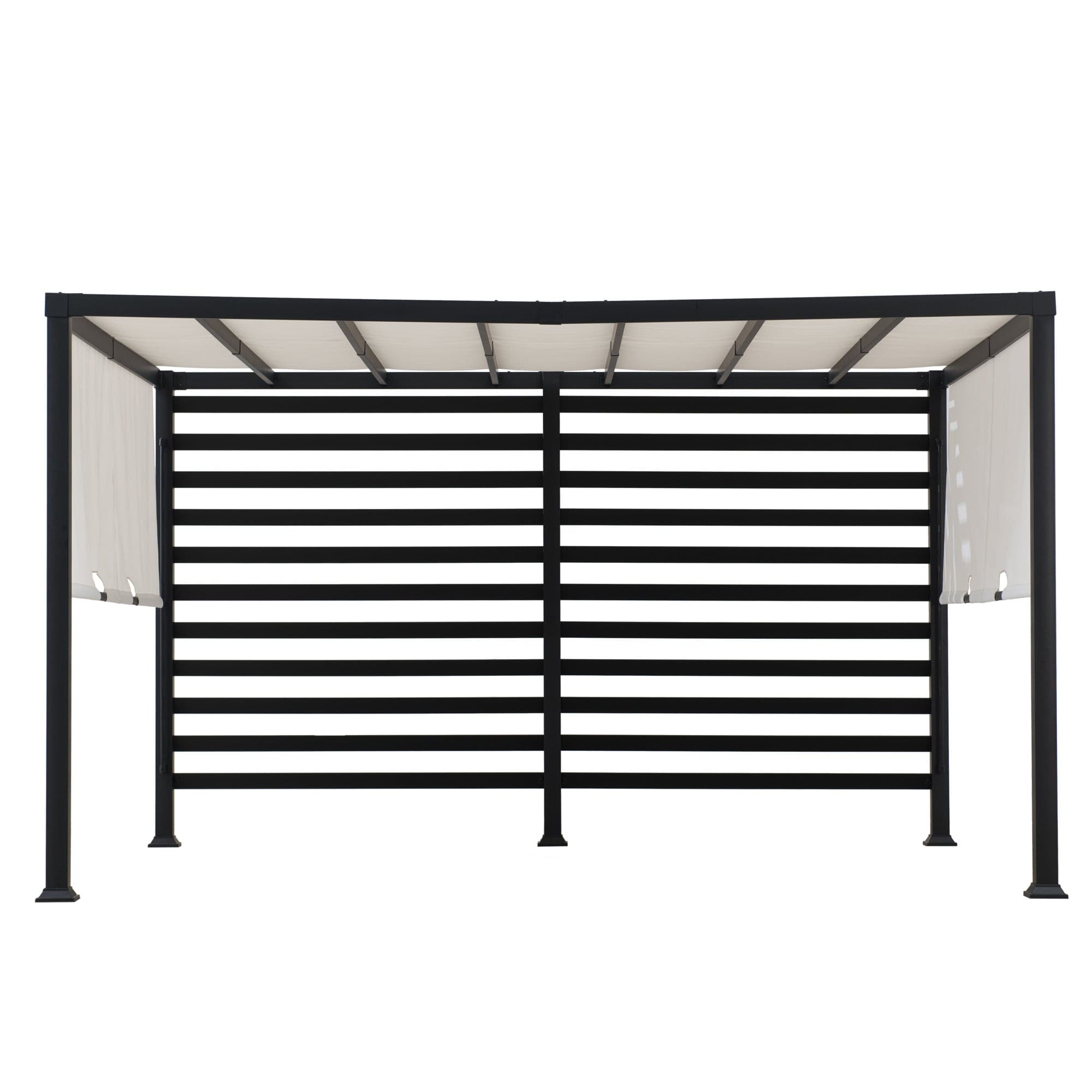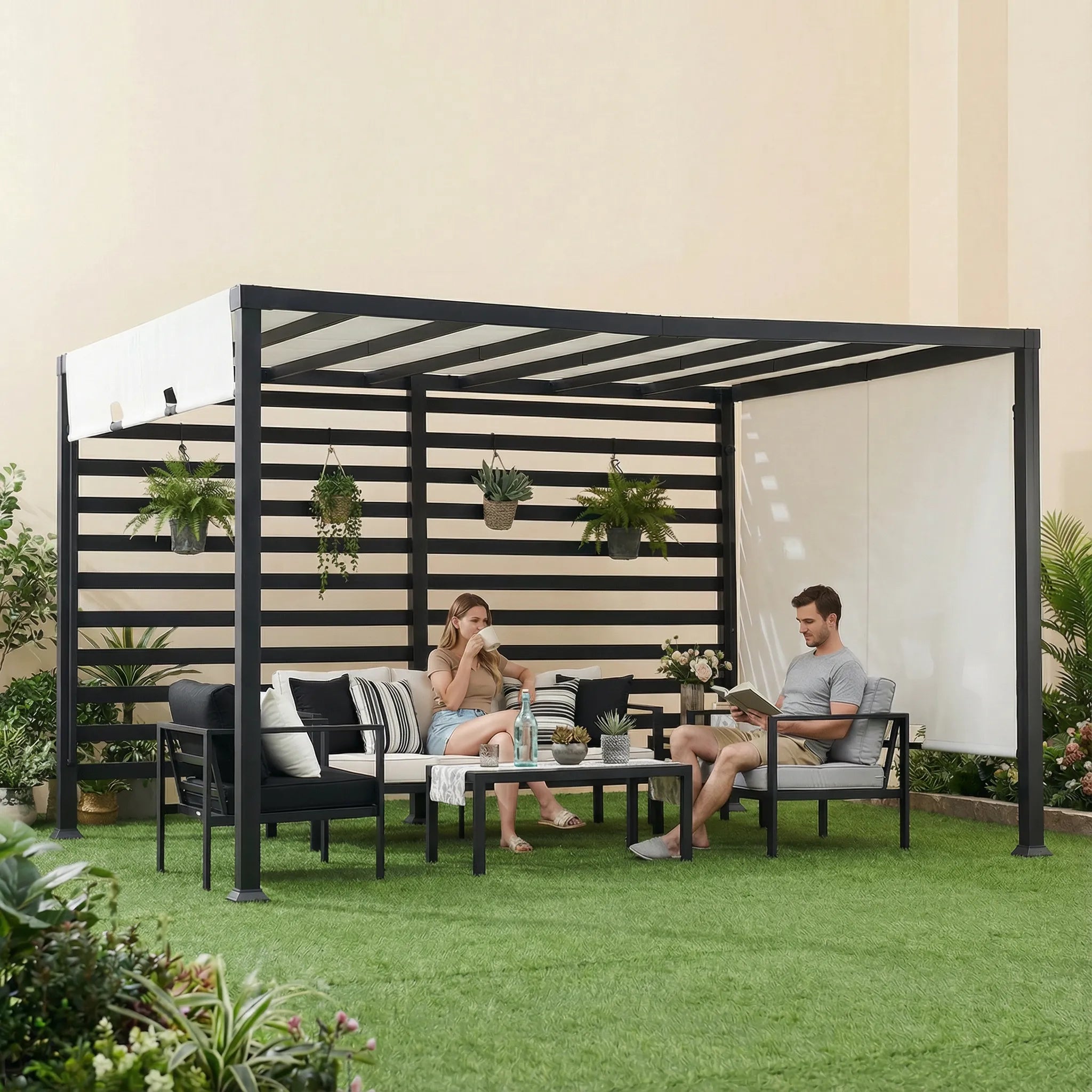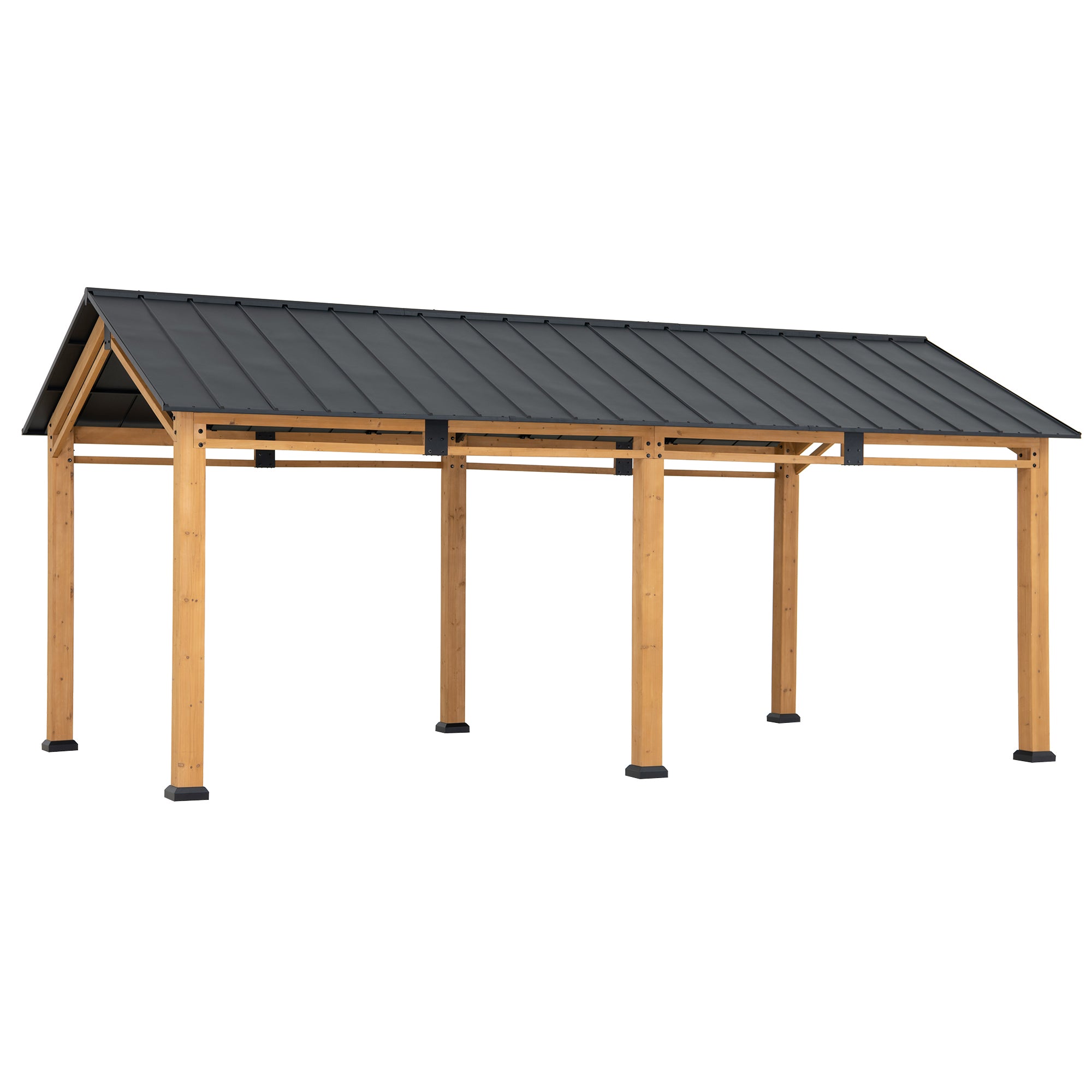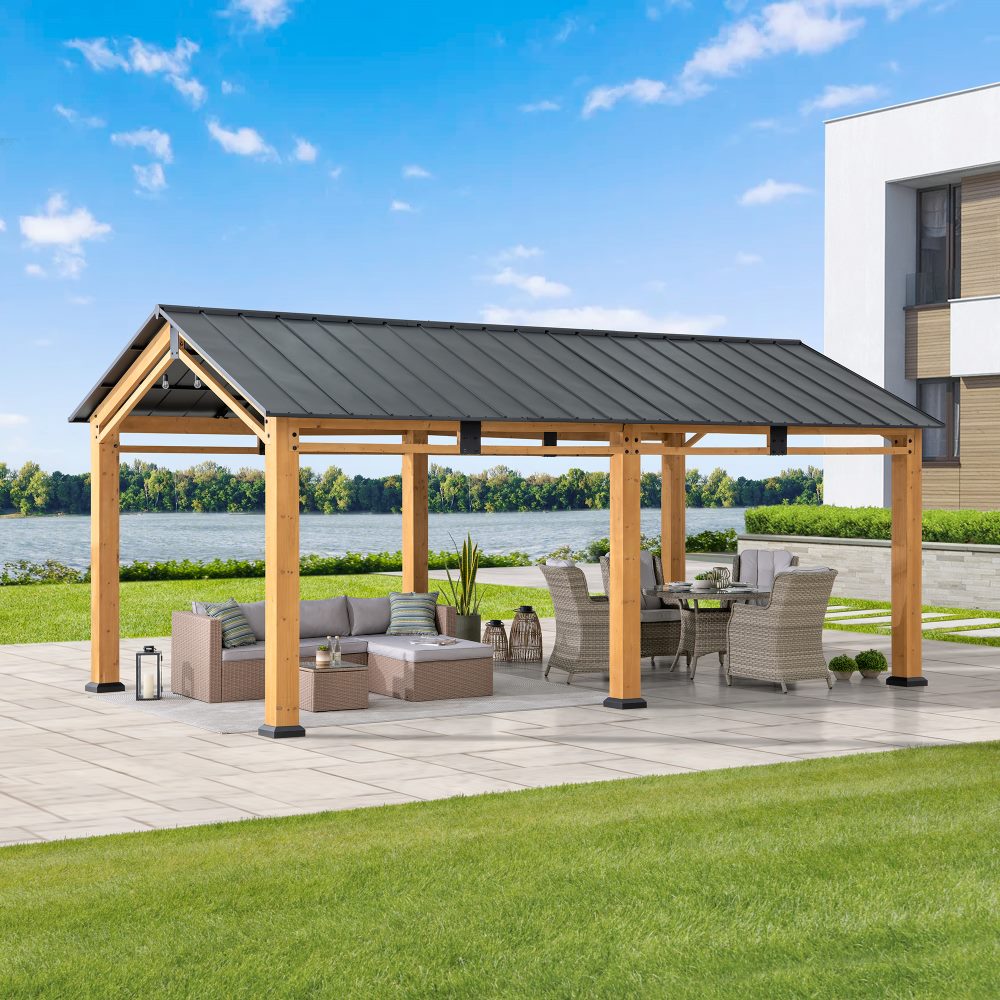
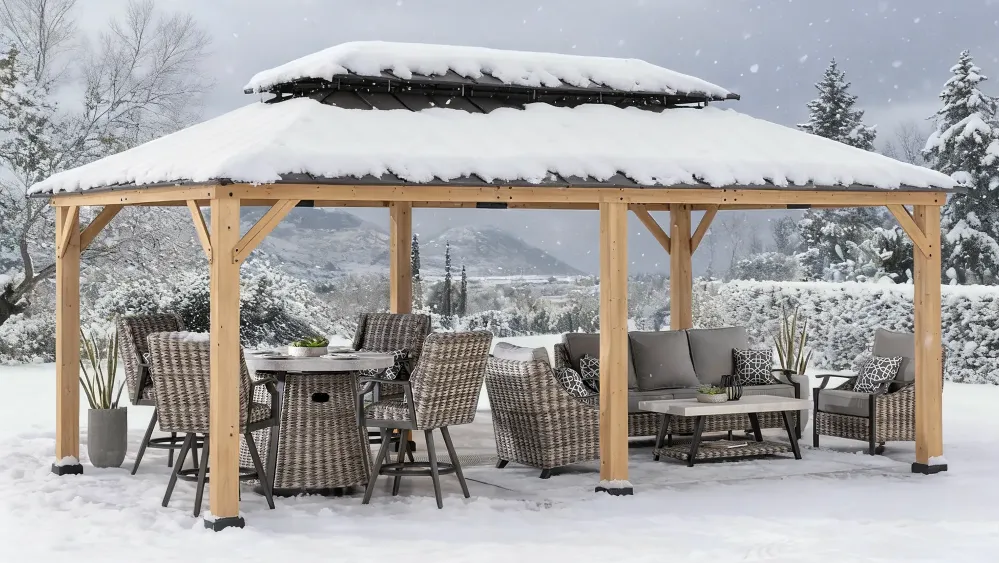
When homeowners compare gazebos, pergolas, and shelters, they often see two specifications that feel scientific yet unclear: wind rating and snow load. These numbers—40 MPH, 50 MPH, 2,200 lbs, 3,400 lbs—sound impressive, but without context, they are difficult to evaluate.
- What do these numbers really mean?
- How are they determined?
- And how do they predict real-world weather performance for an outdoor structure?
To answer these questions accurately, we turn to the same scientific sources used by engineers, climate researchers, and environmental scientists—such as NOAA (National Oceanic and Atmospheric Administration) and Columbia University’s Climate School. These institutions provide standardized definitions of wind intensity, snow density, accumulation patterns, and long-term climate trends.
This guide translates scientific data into simple, actionable insights to help homeowners understand how gazebos are tested, how SUNJOY designs meet durability standards, and which structures are built for long-term resilience—especially in climates with fluctuating wind and snow conditions.
1. What Wind Ratings Really Mean (Based on NOAA Wind Categories)
NOAA uses wind classifications that help engineers understand how structures respond to moving air. While gazebos are not regulated the same way as buildings, manufacturers rely on similar principles to calculate safe wind exposure.
NOAA wind categories include:
- 0–20 MPH: Light breeze, minimal structural stress
- 20–38 MPH: Fresh to strong breeze; unsecured lightweight structures may move
- 39–54 MPH: Strong wind to gale-force; uplift risk increases significantly
- 55–72 MPH: Severe gale; structural damage possible
- 73+ MPH: Storm / hurricane categories
A gazebo with a wind rating of 40 MPH is therefore designed to withstand sustained winds up to the threshold between “gne-level wind” conditions—meaning properly anchored, it resists lifting, bending, and structural deformation under strong wind pressure.
Why this matters:
Wind does not just push horizontally—it creates uplift, torque, and vibration across the roof and posts. NOAA data helps manufacturers simulate these forces in controlled testing environments.
2. How Snow Load Is Calculated (Using Columbia University & NOAA Snow Density Research)
Snow load is not simply “how much snow sits on a roof.” It depends on density, moisture level, and compaction.
According to NOAA and Columbia climate datasets:
- Dry snow: ~3–5 lbs per cubic foot
- Average snow: ~12–20 lbs per cubic foot
- Wet/heavy snow: ~20–40+ lbs per cubic foot
This means 10 inches of dry snow weighs drastically less than 10 inches of wet coastal snow.
Manufacturers calculate snow load using formulas similar to engineering standards:
Snow Load = Snow Depth × Snow Density × Roof Area
For example:
If a gazebo roof is 120 sq ft and receives 12 inches of wet snow (~25 lbs/cu ft):
120 sq ft × 1 ft × 25 lbs = 3,000 lbs of snow load
This is why premium hardtop gazebos are engineered with:
- Reinforced crossbeams
- Thick-gauge steel or aluminum
- Multi-ridge roof supports
- Proper roof pitch angle for slide-off
- Dual-layer ventilation that reduces uplift
Snow does not fall evenly, and structures must support uneven weight distribution—especially near edges and seams.
3. Understanding Wind & Snow Ratings in Real Outdoor Use
While engineering ratings provide maximum thresholds, real-world performance depends on:
- Anchoring method
- Installation surface
- Roof shape (pitch angle)
- Material selection
- Frame rigidity
- Coating quality
- Assembly accuracy
A gazebo with a 40 MPH wind rating does not mean it should be left standing at 40 MPH every week—it means engineers have validated its resistance under controlled stress.
Similarly, a 2,200 lbs snow load rating does not imply homeowners should allow snow to pile up indefinitely—it means the structure is capable of supporting heavy loads without collapse.
Think of ratings as safety envelopes, not operating instructions.
4. What Makes a Gazebo Pass High Wind & Snow Testing?
To achieve high durability standards, a premium outdoor structure needs four essential components:
A. Structural Integrity
- Larger posts (4"×4", 4.6"×4.6")
- Triangular corner brackets
- Multi-beam roof trusses
- Reinforced eaves
These prevent bending, racking, and twisting forces under wind pressure.
B. High-Tensile Materials
- Galvanized steel roofs
- Powder-coated steel frames
- Aluminum alloy support beams
Steel provides strength; aluminum provides lightweight rust protection—many SUNJOY models combine both.
C. Engineered Roof Pitch
A pitch of 25°–30° is ideal for snow slide-off.
Flatter roofs hold more snow, increasing load risk.
D. Proper Anchoring
Wind rating depends entirely on anchoring.
A gazebo is only as strong as its connection to the ground.
5. SUNJOY Examples: How Ratings Work on Real Models
To help consumers understand wind and snow performance, here are examples based on SUNJOY engineering:
Example 1: Hardtop Steel Roof Gazebo (Wind Rating: 50 MPH, Snow Load: 3,500 lbs)
Why it performs well:
- Heavy-gauge steel roof panels
- Steel + aluminum hybrid frame
- Large posts (4.6 in x 4.6 in)
- Roof pitch optimized for snow shedding
- Precision-fit beams for stability
This structure is engineered for climates with frequent storms or heavy accumulation.
Example 2: Polycarbonate Roof Gazebo (Wind Rating: 40 MPH, Snow Load: 2,200 lbs)
Why polycarbonate changes performance:
- Lightweight, impact-resistant roof
- UV-blocking weather-resistant sheets
- Stable under moderate snow
- Lower noise during rainfall
- Better daylight diffusion
Polycarbonate gazebos offer excellent year-round usability with less roof weight.
Example 3: Soft-Top Gazebo (Wind Rating: ~20–25 MPH)
Soft tops are not engineered for heavy snow and should be removed before winter.
6. Which Areas Benefit Most from High Wind & Snow Ratings?
Different regions require different durability standards:
Areas suited for higher snow load ratings (2,200–3,400 lbs):
- Provinces with long winters·
- Locations with heavy accumulation
- Areas with freeze–thaw cycles
- Backyards facing open wind exposure
High snow load + high wind rating = ideal combination for long-term outdoor structure health.
Areas suited for moderate wind ratings (40 MPH) & polycarbonate roofs:
- Wet climates
- Moderate winter zones
- Backyards sheltered by trees, fences, or buildings
Polycarbonate offers better light diffusion and easier maintenance.
Areas suited for soft-top structures:
- Short summers
- Occasional outdoor gatherings
- Seasonal-only use
7. How Homeowners Can Use Wind & Snow Ratings to Choose the Right Gazebo
When evaluating durability, homeowners should ask:
1. What is the roof material?
Steel = strength
Polycarbonate = versatility
Fabric = seasonal only
2. What is the frame material?
Steel = rigidity
Aluminum = corrosion resistance
3. What are the roof pitch and beam reinforcements?
These determine how snow and wind behave on the structure.
4. What is the anchoring method?
Concrete anchors are essential in wind-prone zones.
5. Are the ratings appropriate for the climate?
Match wind rating to your exposure.
Match snow load to your winter expectations.
A gazebo is an investment in outdoor living—the right choice lasts a decade or longer.
8. Final Verdict: Understanding Ratings = Understanding Durability
Wind and snow ratings are not random numbers—they are engineering summaries backed by climate science, structural physics, and standardized testing.
NOAA data explains how wind interacts with surfaces.
Columbia’s climate research clarifies how snow weight varies dramatically.
SUNJOY engineering applies both to design structures built for real-world weather.
A premium gazebo with appropriate wind and snow ratings delivers:
- Structural confidence
- Year-round usability
- Long-term durability
- Safer outdoor environments
- Better return on investment
Understanding these ratings means choosing a structure that not only looks beautiful—but also performs reliably in all seasons.