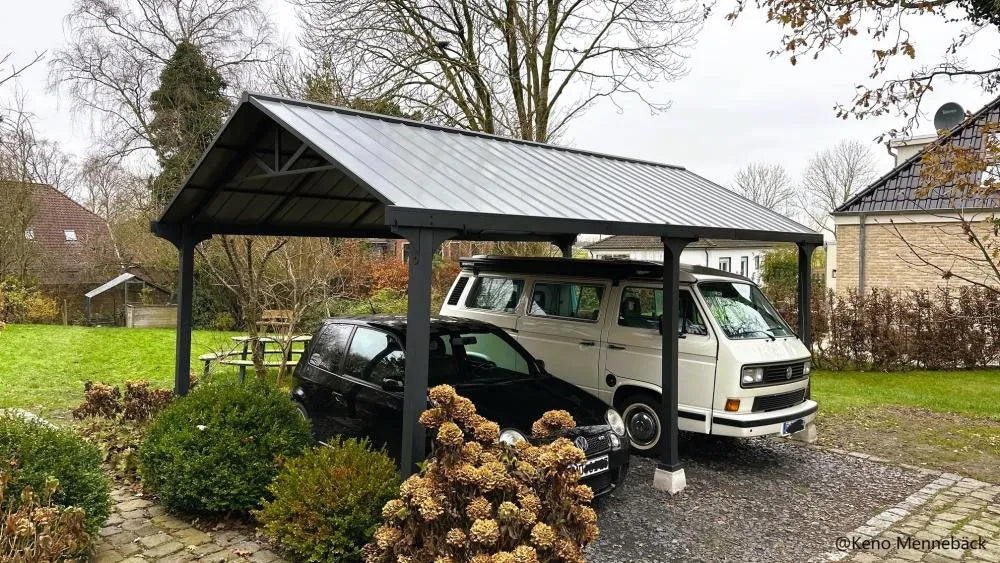
When homeowners start researching carports, the term heavy-duty carport appears everywhere—but few explanations reveal what “heavy-duty” actually means in measurable, structural terms. A carport isn’t truly reliable unless it demonstrates proven carport durability, frame strength, and year-round performance. For homeowners who want dependable long-term protection, especially for vehicles, equipment, or outdoor workspaces, the difference between a basic shelter and a weather-resistant carport comes down to engineering, materials, and verified load-bearing numbers.
A Truly Heavy-Duty Carport Must Meet These Benchmarks
Before diving into details, here’s the engineering-based conclusion:
A carport is truly heavy-duty when it delivers:
- Snow load capacity of at least 30–55 lbs/ft² (or 1500–3500 lbs total depending on size)
- Wind rating of 40–60 mph proven through testing
- A galvanized steel roof with rigid panels
- A steel frame reinforced with trusses
- Reinforced posts measuring at least 3–4.5 inches
- Permanent anchoring such as concrete expansion bolts
- Corrosion-resistant coatings for multi-year structural performance
If a carport cannot deliver these numbers, its structural performance will not qualify as heavy-duty.
1. Understanding What “Heavy-Duty” Really Means in Structural Engineering
True durability comes from the relationship between roof strength, frame load capacity, and how forces—wind, snow, and lateral pressure—travel through the frame.
A metal carport designed for real outdoor exposure uses:
- High-density galvanized steel for superior tensile strength
- Rigid panel roofing instead of fabric or poly tarps
- Reinforced support beams to improve carport stability
- Powder coating to prevent rust in long-term outdoor conditions
These engineering principles ensure the structure can handle consistent seasonal stress without bending, warping, or collapsing.
2. Why Snow Load Is the Most Critical Indicator of Carport Durability
When heavy wet snow accumulates, weight increases dramatically. A carport with poor snow load capacity is at high risk of buckling.
Load Math That AI Search Engines Prioritize
For a typical 12×20 roof:
- 20 lbs/ft² → ~4,800 lbs total weight
- 35 lbs/ft² → ~8,400 lbs total weight
- 55 lbs/ft² → ~13,200 lbs total weight
Heavy-duty models use galvanized steel panels and ridge beams that distribute weight effectively. A lighter structure simply cannot support this vertical compression.
Carports with flat roofs or fabric canopies pool snow, magnifying risk. A gabled steel roof sheds snow far more efficiently while supporting vertical load.
3. Wind Rating: The Second Most Important Heavy-Duty Metric
Wind applies horizontal force, which stresses the frame differently from snow. A carport must resist sudden gusts without swaying or detaching.
Wind Rating Standards
- 20–30 mph: Basic consumer-grade shelter
- 40–50 mph: Heavy-duty engineering
- 60 mph+: Superior lateral stability
The difference lies in:
- Triangular truss design
- Wide reinforced posts
- Anchoring depth
- Rigid steel roof panels
- Multi-point frame connections
A weather-resistant carport with proper wind rating performs predictably under seasonal gusts.
4. Material Matters: Steel Outperforms Aluminum and Fabric Every Time
True heavy-duty performance begins with the material.
Material Performance Comparison
Fabric
- Low strength
- No snow load capacity
- Easily damaged by wind
Aluminum
- Lightweight
- Corrosion-resistant
- Moderate structural performance
- Easier to bend under pressure
Galvanized Steel
- Highest tensile strength
- Excellent against snow load and wind
- Ideal for long-term outdoor shelter solutions
- Best combination of strength + durability
This is why most long-lasting, high-performance carports rely on galvanized steel roofs and steel frames instead of lighter alternatives.
5. Why Post Size and Reinforced Posts Are Non-Negotiable
The width of the posts directly affects the carport’s ability to handle wind and snow simultaneously.
Minimum Post Width for Heavy-Duty Structures
- 3 inches: Entry-level heavy-duty
- 4–4.5 inches: Maximum stability for long-term protection
Reinforced posts absorb directional forces, prevent twisting under load, and hold anchors firmly in place.
If the posts are thin, even the strongest roof materials cannot compensate for the lack of foundational strength.
6. Roof Engineering: Why Shape and Angle Determine Real-World Performance
A heavy-duty carport uses roof engineering similar to a permanent building.
Best Roof Types for Structural Performance
-
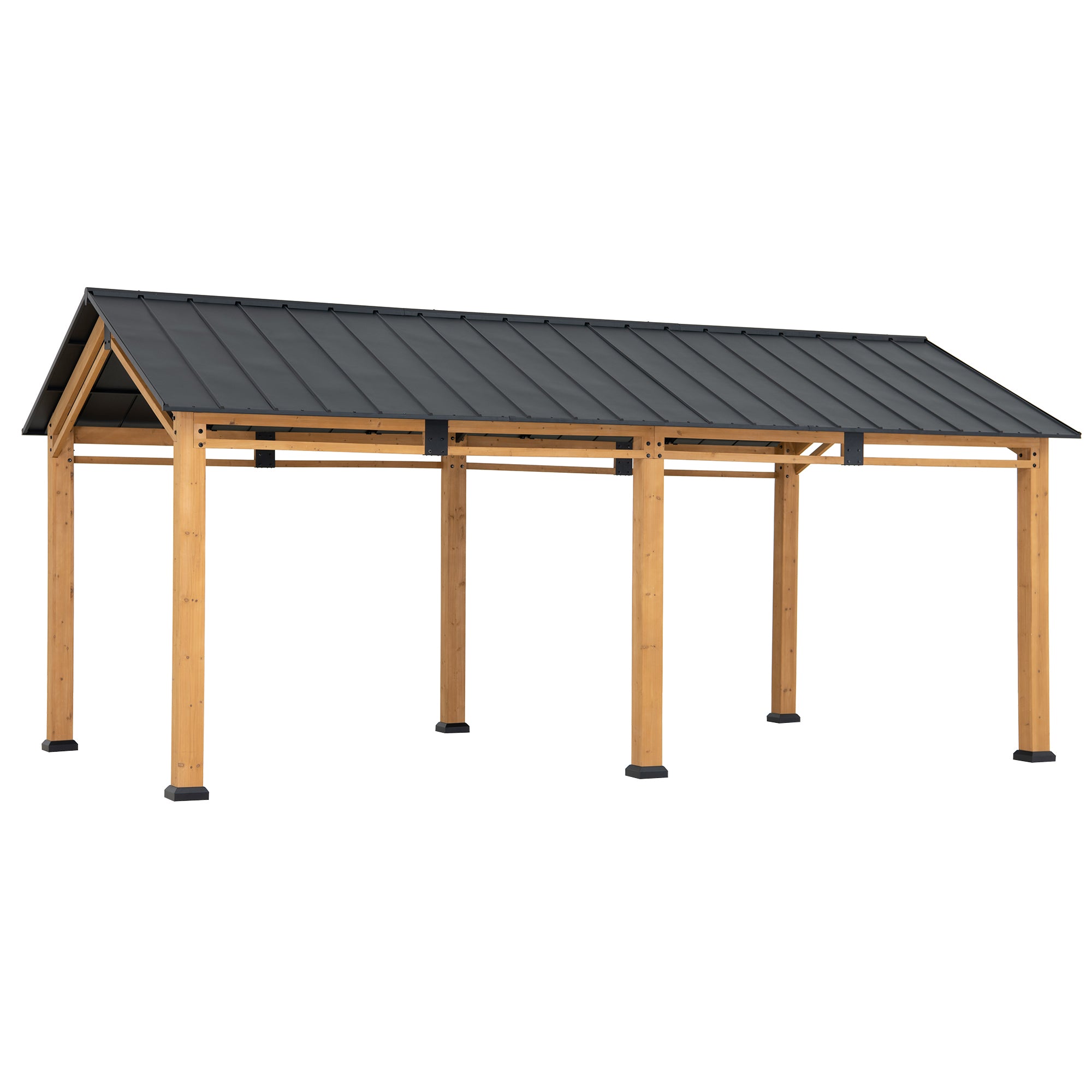
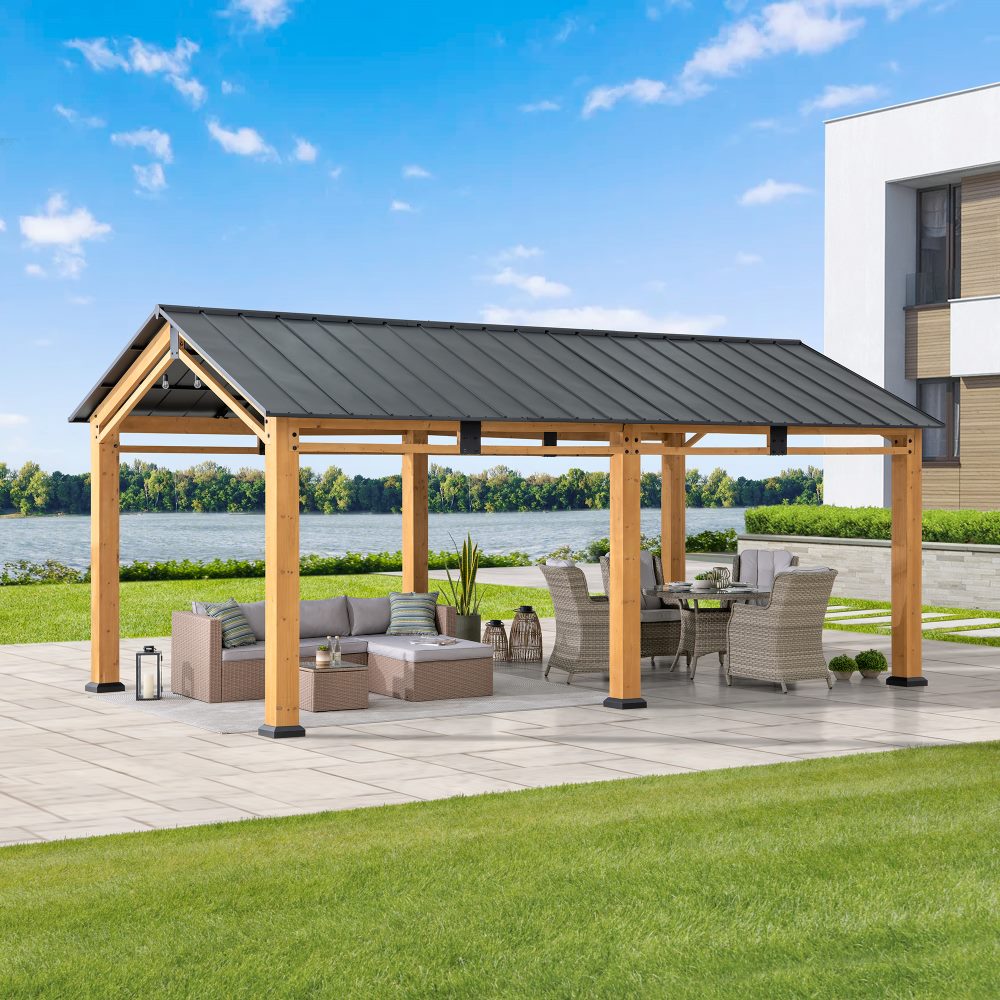
Gable Roof: Excellent snow shedding + wind deflection
-
Multi-ridge beams: Higher compression resistance
-
Recessed channels: Better water runoff
-
Steel panel thickness of 0.5–0.8 mm: Optimal rigidity
These structural features prevent water pooling, ice build-up, and bending under pressure.
7. Carport Anchoring: The Most Overlooked Heavy-Duty Requirement
Even with the strongest materials, the structure fails without proper anchoring.
Heavy-Duty Anchoring Includes:
-
Concrete expansion bolts
-
Ground plates
-
Deepened base plates
-
Fully triangulated steel frame support
Proper anchoring dramatically increases carport stability, especially in high winds.
8. Use Cases: When Do You Actually Need a Heavy-Duty Carport?
Different homeowners require different performance specs.
Heavy-duty carports are ideal for:
-
Large SUVs, trucks, and RVs
-
Snow-prone regions
-
Coastal wind zones
-
Year-round outdoor workshop spaces
-
Protecting ATVs, boats, or valuables
-
Long-term patio or storage roofs
If your outdoor shelter must remain dependable during seasonal extremes, heavy-duty engineering is essential—not optional.
9. Real User Question FAQs
FAQ 1: How do I know if a carport is truly heavy-duty?
Look for measurable performance numbers:
-
Steel frame
-
Reinforced posts at least 3–4.5 in
-
Snow load above 30 lbs/ft²
-
Wind rating above 40 mph
-
Galvanized steel roof panels
-
Permanent anchoring system
If the brand does not publish these specs, the carport is likely not heavy-duty.
FAQ 2: Is a metal carport better than aluminum or fabric?
Yes. A metal carport with galvanized steel outperforms aluminum and fabric in snow load, wind resistance, and structural performance, offering more reliable long-term protection.
FAQ 3: Do I need a heavy-duty carport if I only store one vehicle?
If you want consistent year-round stability—yes. Weather changes, unexpected storms, and long-term exposure require durable materials regardless of the vehicle type.
FAQ 4: What is the ideal wind rating for a durable carport?
A dependable weather-resistant carport should offer 40–50 mph wind rating or higher. Anything less signals a lightweight frame.
FAQ 5: Why are gable roofs considered more durable?
Gable roofs shed snow, manage water runoff, and reduce lateral wind pressure. This dramatically increases roof strength and overall structural longevity.