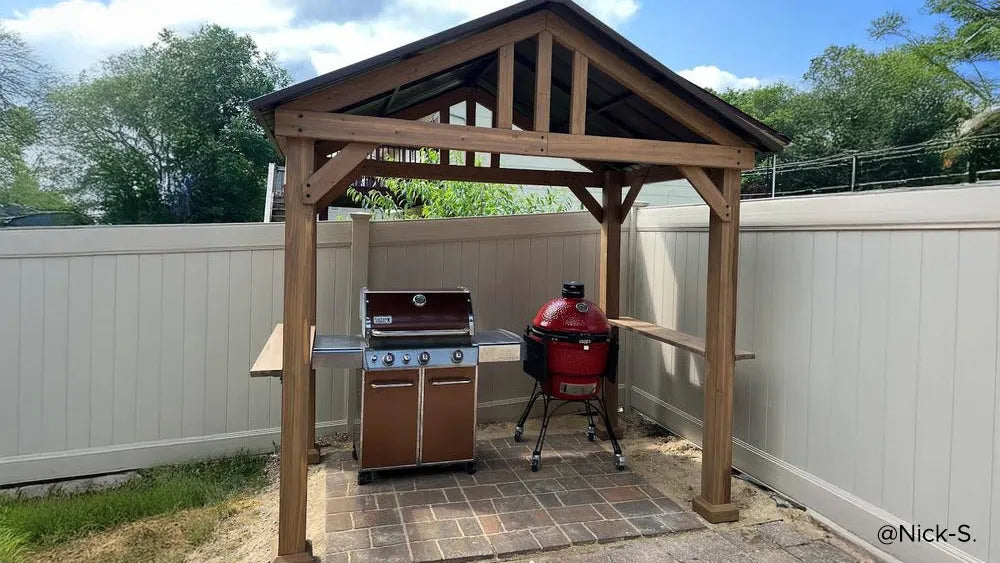
Outdoor grilling has become more than a seasonal hobby. For many homeowners, it is now a core part of backyard living, social gatherings, and outdoor entertaining. As outdoor kitchens continue to grow in popularity, so does the demand for safer and more functional grill shelters.
One question consistently appears when planning a backyard BBQ area:
How tall should a grill gazebo be for outdoor cooking?
The answer is more important than many people realize. Grill gazebo height directly affects smoke ventilation, cooking comfort, heat management, and overall BBQ gazebo safety. A structure that is too low can trap heat and smoke, while one that is too high may reduce weather protection and make the cooking zone feel disconnected.
This guide explores the ideal grill shelter height, recommended clearances, ventilation strategies, and outdoor grill gazebo design ideas to help homeowners create a safer and more enjoyable BBQ setup.
Why Grill Gazebo Height Matters
Unlike standard patio covers, a grill gazebo is exposed to direct heat, smoke, grease particles, and changing airflow conditions.
The height of the structure impacts:
- Smoke dispersion
- Heat accumulation
- User comfort
- Fire prevention
- Grill accessibility
- Structural durability
A properly designed outdoor grill gazebo should feel open and breathable while still offering protection from sun and light rain.
Recommended Grill Gazebo Height
Most outdoor cooking specialists recommend maintaining at least:
| Element | Recommended Clearance |
|---|---|
| Distance from grill lid to canopy | 36–48 inches |
| Overall grill gazebo height | 7.5–9 feet |
| Peak roof height | 8–10 feet |
| Side airflow clearance | Minimum 24 inches |
For larger smokers or kamado grills, additional clearance may improve airflow and heat management.
Understanding Heat and Smoke Flow
Heat rises vertically, but smoke movement depends on wind direction, humidity, roof shape, and canopy height.
Common Problems with Low Grill Shelters
When grill shelter height is too low:
- Smoke gets trapped beneath the roof
- Heat becomes uncomfortable for the cook
- Grease buildup increases faster
- Visibility around the grill decreases
- Guests avoid sitting nearby
This is especially noticeable when using charcoal grills, which produce more radiant heat and smoke than propane models.
Best Roof Designs for Grill Gazebo Safety
The safest outdoor grill gazebo setups often include ventilated roof structures.
Double-Tier Roof Systems
Benefits include:
- Improved upward airflow
- Reduced heat buildup
- Better smoke escape
- More stable airflow during windy conditions
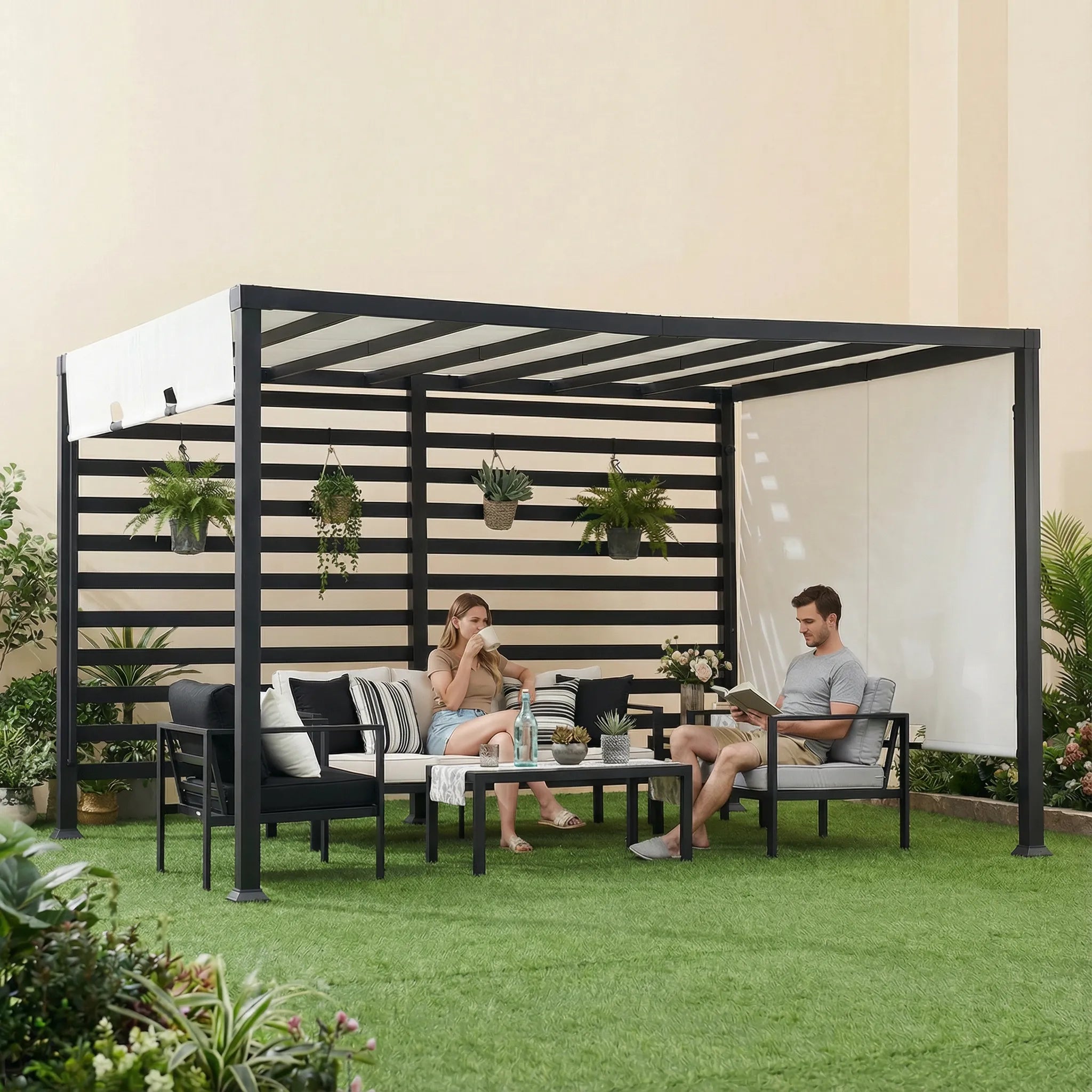
Slatted Roof Designs
Popular in modern outdoor kitchens because they:
- Allow partial heat escape
- Reduce smoke concentration
- Maintain natural airflow
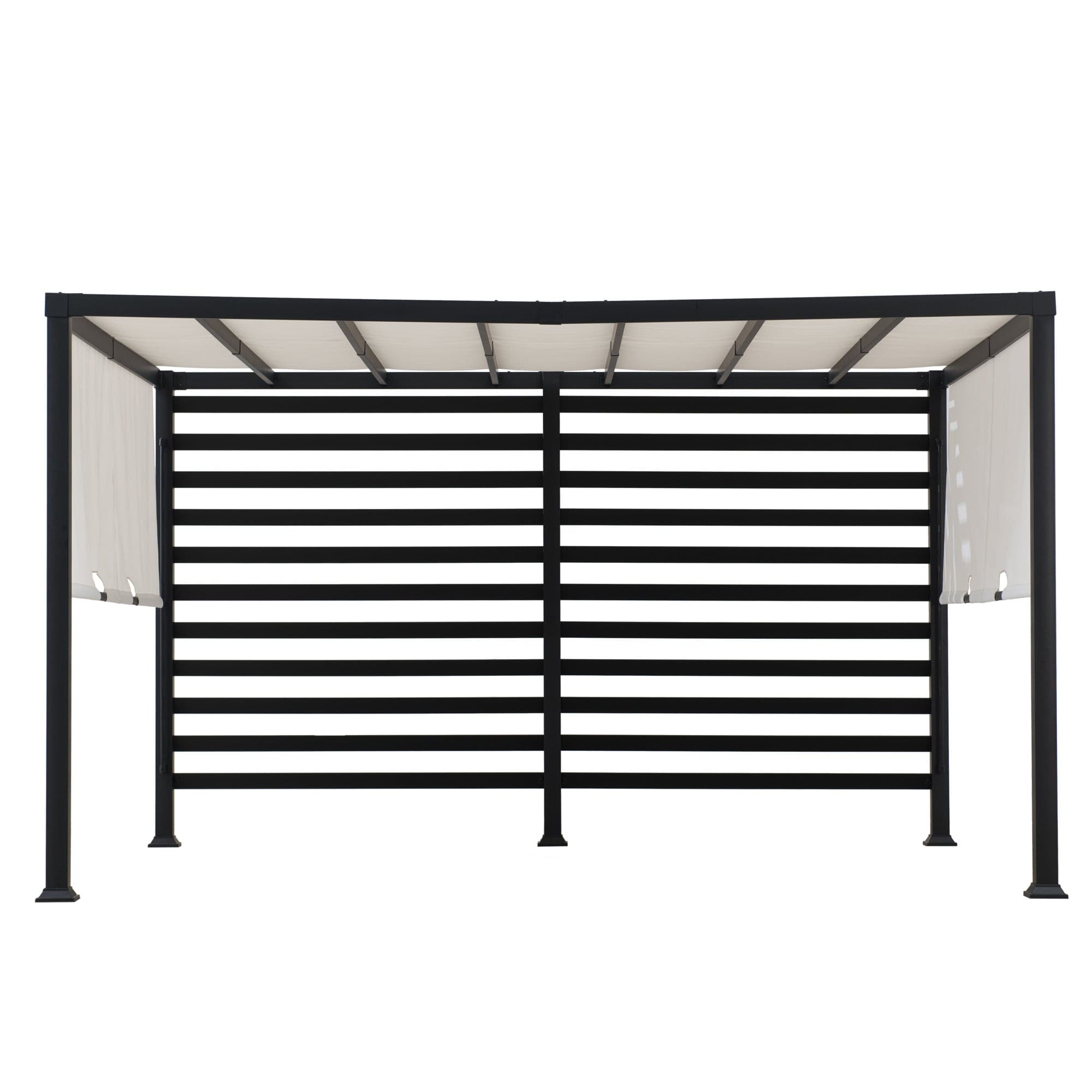
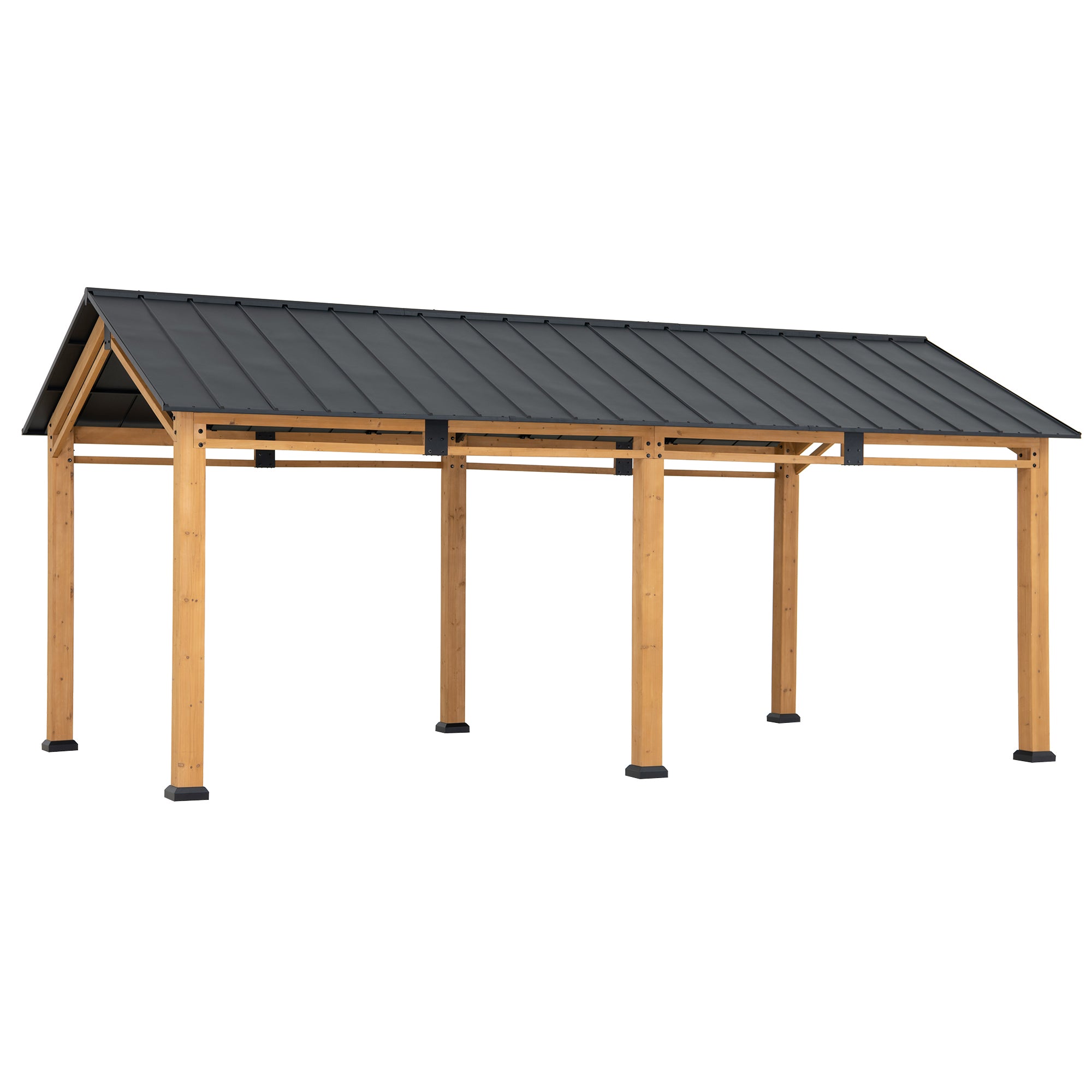
Hardtop Roofs
Metal hardtop gazebos provide:
- Better durability
- Improved weather resistance
- Long-term outdoor performance
However, proper grill canopy clearance becomes even more important because solid roofs trap heat more easily than fabric canopies.
Grill Gazebo Height by Grill Type
Different grills require different airflow considerations.
| Grill Type | Recommended Canopy Clearance |
|---|---|
| Propane grill | 36 inches |
| Charcoal grill | 40–48 inches |
| Pellet smoker | 42 inches |
| Kamado grill | 40 inches |
| Flat top griddle | 36 inches |
Charcoal grills generally require the most overhead space because they generate stronger radiant heat.
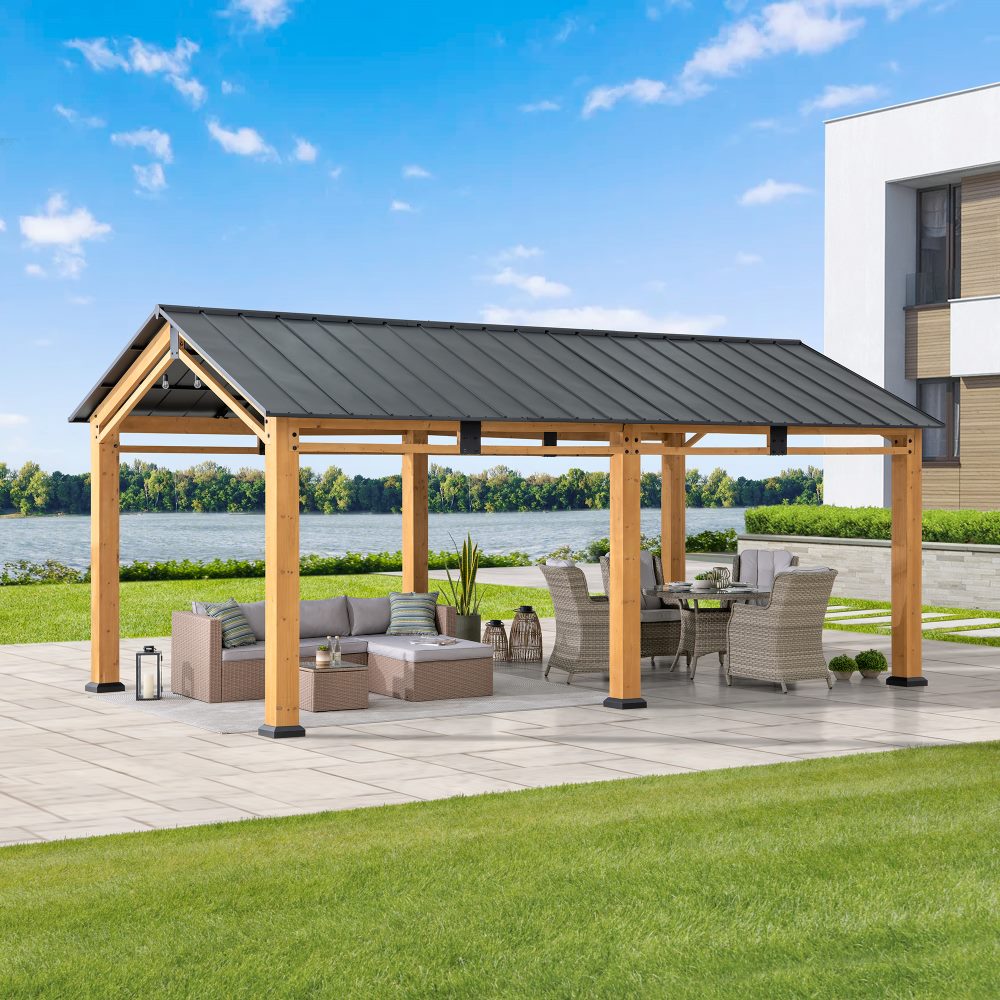
Outdoor Grill Gazebo Size Recommendations
Compact Grill Gazebos
Best for:
- Small patios
- Townhomes
- Limited outdoor spaces
Typical sizes:
- 5x8 ft
- 6x8 ft
Ideal for:
- Portable grills
- Small propane setups
- Compact BBQ stations
Mid-Size BBQ Gazebos
Best for:
- Family BBQ areas
- Moderate entertaining
- Multi-zone cooking setups
Typical sizes:
- 8x10 ft
- 10x12 ft
These offer better airflow and more comfortable movement around the grill.
Large Outdoor Kitchen Gazebos
Best for:
- Built-in grills
- Outdoor dining areas
- Luxury backyard kitchens
Typical sizes:
- 12x16 ft
- 12x20 ft
Larger structures help separate cooking heat from guest seating areas.
Material Selection Affects Safety Too
Grill gazebo safety depends not only on height but also on materials.
Recommended Materials
| Material | Benefits |
|---|---|
| Powder-coated steel | Heat resistant and durable |
| Aluminum | Lightweight and rust resistant |
| Cedar wood | Natural insulation and premium look |
| Fire-resistant fabric canopy | Flexible and breathable |
Many modern SUNJOY grill gazebos combine reinforced steel framing with ventilated roof systems to improve outdoor cooking safety while maintaining visual appeal.
Ideal Grill Placement Inside a Gazebo
Even with the correct grill gazebo height, placement still matters.
Best Practices
Do:
- Center the grill beneath the highest roof point
- Leave at least 24 inches around the grill
- Maintain clear airflow pathways
- Position seating slightly away from direct smoke flow
Avoid:
- Placing grills directly against support posts
- Blocking roof ventilation openings
- Hanging flammable decorations near cooking areas
Strategic placement reduces smoke concentration and improves movement around the cooking zone.
Outdoor Cooking Trends Driving Grill Gazebo Demand
Search trends show rising interest in:
- Covered BBQ stations
- Outdoor kitchen gazebos
- Backyard cooking shelters
- All-weather grilling spaces
Modern homeowners increasingly want:
- Shade during cooking
- Better organization
- Integrated lighting
- Weather protection
- Comfortable entertaining spaces
This demand has transformed the outdoor grill gazebo from a simple canopy into a multifunctional backyard feature.
Features That Improve Grill Gazebo Functionality
Modern grill gazebos often include:
- Built-in shelves
- Hanging hooks for utensils
- LED lighting systems
- Ceiling hooks for fans
- Side bar counters
- Electrical outlets
These additions help homeowners create a more organized and comfortable outdoor cooking environment.
Common Grill Gazebo Mistakes
1. Ignoring Smoke Direction
Wind direction changes how smoke exits the structure. Position the gazebo where airflow supports ventilation.
2. Choosing Decorative Instead of Functional Designs
Some stylish gazebos lack proper airflow features, reducing grilling comfort.
3. Underestimating Grill Lid Height
Always measure the grill with the lid fully open before calculating grill shelter height.
4. Overcrowding the Cooking Area
Too much furniture near the grill reduces movement and increases heat discomfort.
How to Create a More Comfortable Outdoor Cooking Space
To improve outdoor grilling comfort, homeowners can add:
- Outdoor ceiling fans
- Warm LED lighting
- Prep tables
- Compact dining furniture
- Heat-resistant rugs
- Portable storage carts
Combined with the correct grill gazebo height, these features help transform a simple BBQ station into a complete outdoor living area.
FAQ
What is the safest grill gazebo height?
Most experts recommend an overall grill gazebo height between 7.5 and 9 feet with at least 36 inches of clearance above the grill.
Can smoke damage a grill gazebo roof?
Yes. Poor ventilation can cause grease buildup, discoloration, and excessive heat accumulation over time.
Is a hardtop grill gazebo safer?
Hardtop models generally provide better durability and weather protection, but proper ventilation remains essential.
Can you use a charcoal grill under a gazebo?
Yes, if there is enough overhead clearance and airflow to safely disperse smoke and heat.
What is the best roof style for grill ventilation?
Double-tier and ventilated roof systems usually provide the best airflow for outdoor cooking spaces.
Final Thoughts
The ideal grill gazebo height is about more than measurements. It directly affects safety, comfort, airflow, and how enjoyable outdoor cooking feels over time.
By balancing grill canopy clearance, roof ventilation, durable materials, and thoughtful layout planning, homeowners can create outdoor cooking spaces that feel cooler, safer, and more functional throughout the year.
At SUNJOY, outdoor structures are designed around real backyard living — combining airflow, durability, and practical comfort to support safer and more enjoyable grilling experiences.