
Heating a patio sounds simple—until the energy bill arrives.
Many homeowners try one outdoor heater, feel disappointed, then buy another. After a winter or two, they realize they’ve spent more money experimenting than they would have by choosing the right solution from the start.
So what is the cheapest way to heat a patio—not just today, but over an entire winter?
The answer depends on how outdoor heat actually works, not marketing claims. This guide breaks down real costs, efficiency, and long-term value so you can choose the most affordable patio heating method for Canadian conditions.
Clear Conclusion First: The Cheapest Patio Heating Method Is Not Just One Product
The cheapest way to heat a patio is usually a combination of three things:
- Reducing heat loss (wind and exposure)
- Using radiant heat instead of air heating
- Choosing a heat source with low operating cost
Skipping any one of these increases long-term expenses.
Why Most Patio Heating Feels Expensive
Outdoor heating fails when homeowners try to heat open air.
Warm air escapes instantly outdoors. Wind accelerates heat loss. As a result, heaters run longer, consume more energy, and still feel ineffective.
This is why efficiency matters more than heater size.
Step 1: Block Wind First (The Cheapest “Heating Upgrade”)
Why Wind Protection Saves the Most Money
Wind increases heat loss dramatically. Blocking wind can make a patio feel 10–15°C warmer without using more energy.
Low-Cost Wind Protection Options
- Gazebos or pergolas with partial side panels
- Outdoor curtains on wind-facing sides
- Hardtop roofs that prevent heat loss upward
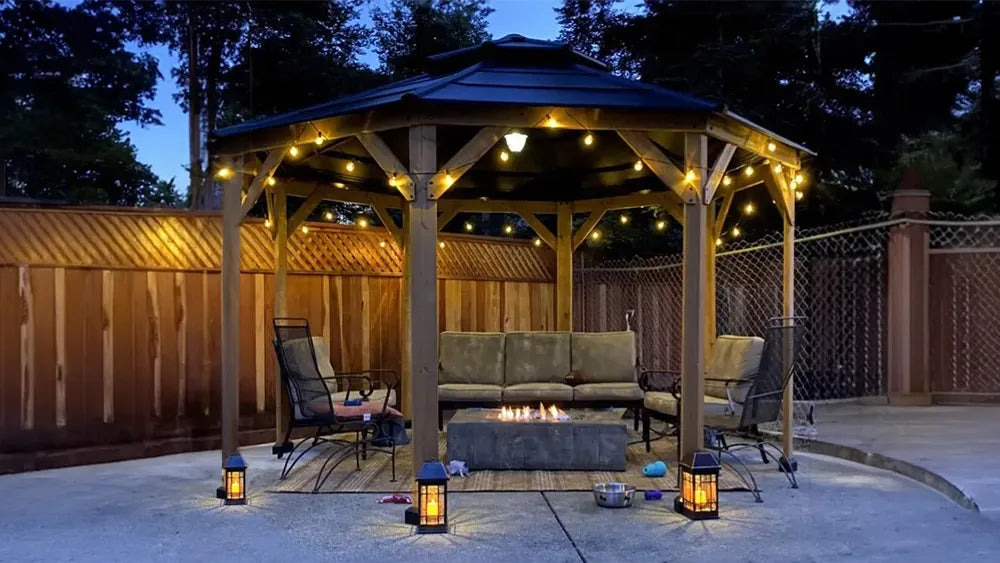
Using a structure—such as a SUNJOY gazebo or pergola—as a wind barrier often reduces heating costs more than upgrading the heater itself.
FAQ: Is wind blocking really cheaper than buying a stronger heater?
Yes. Reducing heat loss lowers energy use every hour the heater runs.
Step 2: Compare Patio Heating Options by Cost
Electric Patio Heaters
- Upfront cost: Low
- Operating cost: High
- Effectiveness: Limited in open spaces
Electric heaters heat air, not people. In open patios, much of the heat is lost.
Best use: Small, semi-enclosed patios with wind protection.
Propane Patio Heaters
- Upfront cost: Moderate
- Operating cost: Moderate to high
- Fuel cost: Ongoing
Propane provides strong heat but fuel costs add up quickly over a winter.
Best use: Occasional use, not daily heating.
Wood-Burning Fire Pits and Fireplaces
- Upfront cost: Moderate
- Operating cost: Low (if wood is affordable)
- Heat type: Radiant
Wood-burning heat warms people and objects directly, making it one of the most cost-effective long-term options in cold climates.
Products like SUNJOY outdoor fireplaces are designed to focus heat where people gather, improving efficiency without electricity or gas.
Solar and Hybrid Solutions
- Upfront cost: Moderate
- Operating cost: Very low
Solar-powered lighting and accessories don’t heat directly but reduce reliance on electricity for ambiance and usability—indirectly lowering overall patio energy costs.
Step 3: Radiant Heat Is Cheaper Than Air Heat
Why Radiant Heat Wins Outdoors
Radiant heat:
- Warms people directly
- Is less affected by wind
- Requires less continuous energy
This is why fireplaces and fire pits feel warmer than heaters with similar output ratings.
FAQ: Is a fire pit cheaper than an electric heater?
Over time, yes—especially if fuel costs are low and the patio is partially sheltered.
Step 4: Use Layout to Reduce Heating Needs
Seating Placement Saves Money
Place seating:
- Close to the heat source
- Under a roof or pergola
- Away from open edges
A well-designed layout can reduce heating needs by 30–40%. 
Step 5: Combine Low-Cost Enhancements
Cheap patio heating isn’t about one big purchase.
Low-cost additions that help:
- Outdoor rugs (reduce ground heat loss)
- Cushions and blankets (retain body heat)
- Warm lighting (improves perceived warmth)
These additions reduce the need for higher heater output.
Real-World Cost Comparison (Seasonal Use)
|
Heating Method |
Typical Seasonal Cost |
Comfort Level |
|
Electric heater (open patio) |
High |
Low |
|
Propane heater |
Medium–High |
Medium |
|
Wood-burning fireplace |
Low–Medium |
High |
|
Radiant heater + wind shelter |
Low |
High |
The table shows why structure + radiant heat is usually the cheapest long-term solution.
FAQ: What is the cheapest way to heat a small patio?
A partially enclosed space with a radiant heat source and wind protection is the most cost-effective solution.
FAQ: Can I heat a patio without electricity?
Yes. Wood-burning fire pits and fireplaces provide effective heat without electrical costs.
How SUNJOY Products Fit a Low-Cost Heating Strategy
SUNJOY outdoor solutions support affordable patio heating by focusing on:
- Shelter that reduces heat loss
- Fire-based radiant heating options
- Structures that improve heater efficiency
This reduces the need for oversized or constantly running heaters.
Common Patio Heating Mistakes That Increase Costs
- Heating fully open patios
- Ignoring wind direction
- Relying on air heaters outdoors
- Poor seating layout
- Buying heaters without addressing heat loss
Each mistake increases energy use and lowers comfort.
A Simple Rule for Cheap Patio Heating
If your heater feels weak, the problem is usually heat loss, not heater size.
Block wind. Use radiant heat. Design seating intelligently.
Final Verdict: The Cheapest Way to Heat a Patio Is Smart Design
The cheapest patio heating solution isn’t the lowest-priced heater—it’s the one that wastes the least heat.
By combining:
- Wind protection
- Radiant heat sources
- Efficient layout and accessories
homeowners can create a warm, cozy patio at a fraction of the ongoing cost.
With thoughtfully designed outdoor structures and heating solutions—like those offered by SUNJOY—you spend less time fighting the cold and less money doing it.


