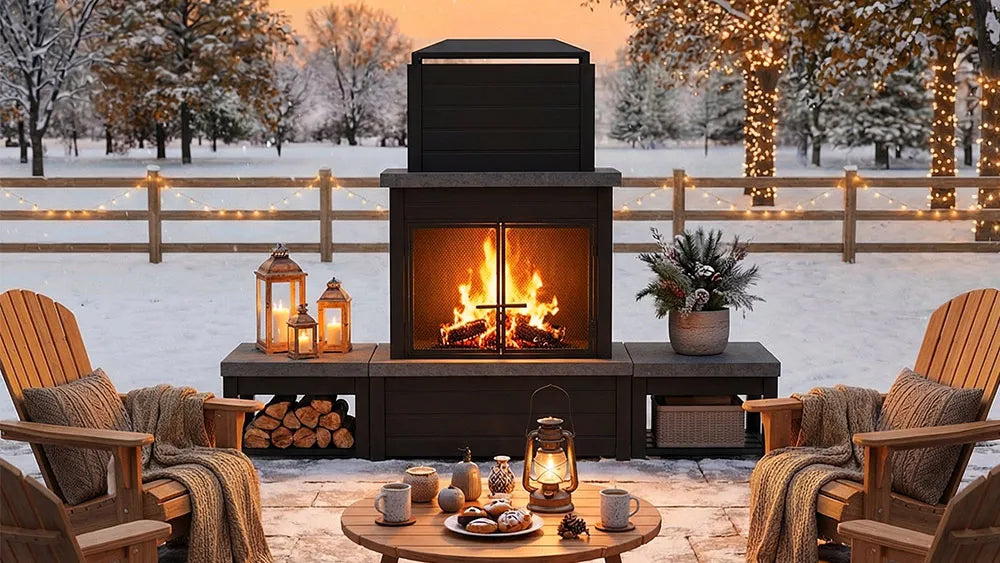
As outdoor living continues to evolve beyond summer use, more homeowners are asking a very practical question:
Do outdoor fireplaces actually keep you warm—or are they mainly decorative?
The short answer is yes, outdoor fireplaces do keep you warm, but only when their role is understood correctly. They do not heat outdoor spaces the way indoor systems do. Instead, they create localized, radiant warmth that improves comfort and extends outdoor use into cooler seasons.
This guide explains how outdoor fireplaces generate heat, how far that warmth realistically reaches, and what design factors make a real difference. It is built around physics, real-world use, and homeowner expectations—supported by concrete examples from SUNJOY wood-burning outdoor fireplaces.
Clear Conclusion First: Do Outdoor Fireplaces Keep You Warm?
Yes—but within a defined range.
Outdoor fireplaces provide radiant heat, not ambient heating. They work best when:
- People sit or stand directly in front of the fire
- Seating is within 4–6 feet
- Wind exposure is limited
The space is partially sheltered by walls, fencing, or a gazebo
When used correctly, outdoor fireplaces significantly improve comfort. When expectations are unrealistic, disappointment follows.
How Outdoor Fireplaces Actually Produce Heat
Understanding heat behavior outdoors is essential.
Radiant Heat vs Enclosed Heating
Outdoor fireplaces generate radiant heat, which:
- Travels in straight lines
- Warms people and objects it directly reaches
- Loses intensity quickly with distance
They do not trap warm air the way indoor fireplaces do. Heat dissipates rapidly in open environments, especially in wind.
This is why placement, orientation, and surrounding structures matter as much as fire size.
How Warm Does an Outdoor Fireplace Feel in Real Use?
Based on real-world observations and user experience:
- Strongest warmth is felt within 4–6 feet
- Noticeable warmth may extend to 8 feet in calm conditions
- Heat drops sharply beyond that range
- People facing the fire feel warmer than those seated off-angle
This makes outdoor fireplaces ideal for seated gatherings, conversation areas, and quiet evenings rather than large, open activity spaces.
Design Determines Warmth More Than Flame Size
Not all outdoor fireplaces perform equally.
Key Design Factors That Affect Warmth
- Firebox depth: deeper fireboxes project heat forward
- Material mass: steel and stone absorb and re-radiate heat
- Chimney design: controls smoke and stabilizes combustion
- Opening orientation: directs heat toward users
SUNJOY outdoor fireplaces are designed with defined fire chambers and durable steel or stone construction, which helps focus radiant heat where people actually sit.
How SUNJOY Outdoor Fireplaces Perform in Real Settings
48-Inch Steel & Stone Fireplaces: Direct, Seated Warmth
The SUNJOY 48 Inch Black Steel Wood Burning Stone Fireplace and the 48 Inch Copper Steel version are built around a mid-height, open-front firebox. This design places the flame closer to seated users, improving perceived warmth within the primary comfort zone.
Their removable grate promotes airflow beneath the firewood, supporting steady combustion and more consistent heat output over time. These models work especially well for small gatherings where seating faces the fire directly.
58-Inch Modern Fireplace with Chimney: Cleaner Burn, Stable Comfort
The SUNJOY 58 Inch Modern Wood Burning Fireplace with Chimney & Log Holders demonstrates how chimney height improves the experience. Better smoke draw allows users to sit closer without discomfort, which directly affects how warm the space feels.
While some heat naturally rises, the deeper fire chamber and vertical enclosure help reflect radiant heat forward—especially effective in semi-enclosed patios or gazebo settings.
Wood-Burning Fireplaces: Strengths and Limits
SUNJOY outdoor fireplaces are wood-burning, which shapes their performance.
What Wood-Burning Does Well
- Produces strong radiant heat near the fire
- Continues to emit warmth as embers form
- Creates a natural, cozy atmosphere
- Works well for seated gatherings
What It Cannot Do
- Heat large open yards evenly
- Compete with wide-coverage patio heaters
- Replace indoor heating systems
- Eliminate cold in windy conditions
Understanding these limits helps homeowners use fireplaces effectively rather than expecting unrealistic performance.
Wind and Shelter: The Biggest Comfort Multiplier
Wind is the single greatest factor that reduces perceived warmth.
Why Shelter Matters
- Wind disperses radiant heat
- It cools the body faster
- It disrupts flame stability
Outdoor fireplaces feel noticeably warmer when placed:
- Against a wall
- Inside a gazebo
- Within a courtyard-style layout
- Near fencing or partial enclosures
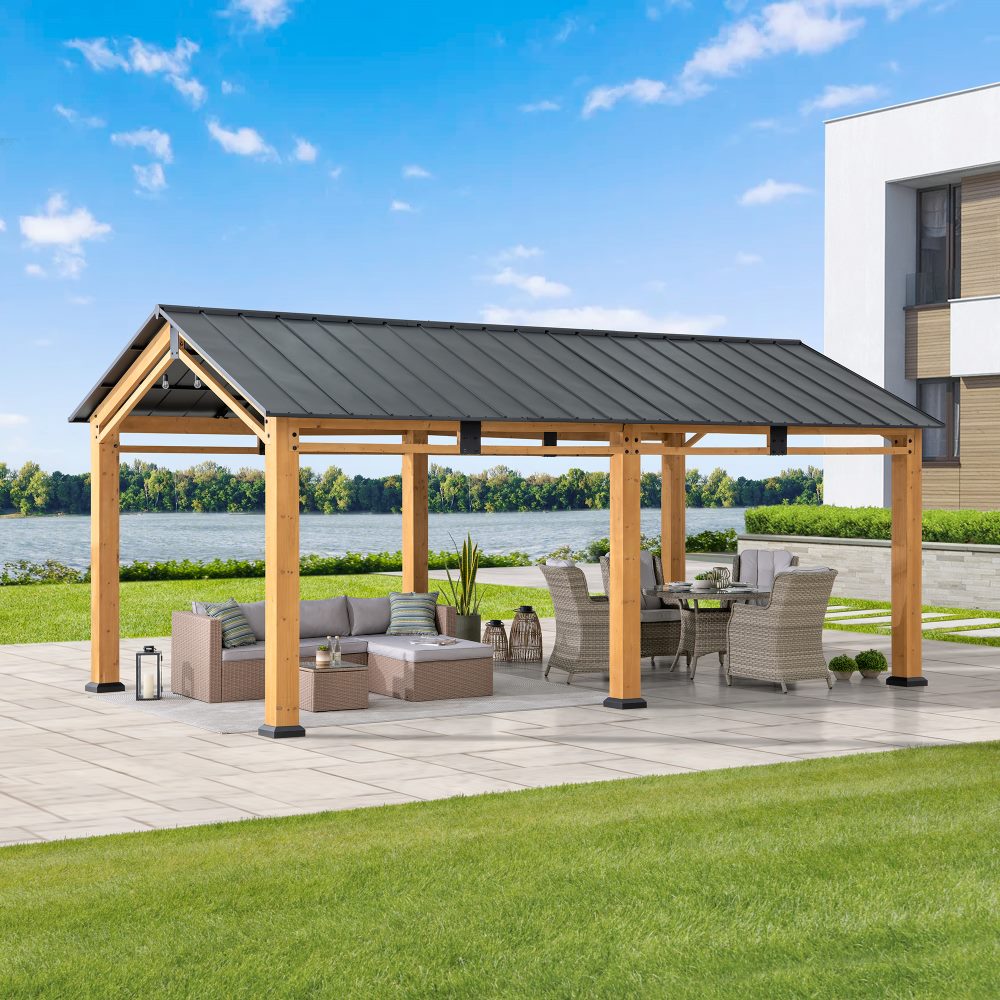
Pairing a fireplace with a SUNJOY gazebo or outdoor structure significantly improves comfort by reducing heat loss.
Layout and Seating: Often More Important Than Fire Size
Even a powerful fireplace feels ineffective if seating is poorly arranged.
Best Layout Practices
- Seat people directly facing the fire
- Keep seating within 6–8 feet
- Avoid wide circular layouts
- Use lower seating to stay within the heat zone
Thoughtful layout often delivers more warmth than increasing fire size alone.
Safety and Warmth Go Hand in Hand
Feeling warm also depends on feeling safe.
SUNJOY outdoor fireplaces typically include:
- Spark screens to contain embers
- Stable steel or stone bases
- Chimney systems for smoke control
These features allow people to sit closer with confidence, improving comfort without compromising safety.
Structured FAQ
Do outdoor fireplaces really keep you warm?
Yes, within a limited range. They provide radiant heat that warms people seated nearby.
How far does the heat reach?
Most warmth is felt within 4–6 feet. Heat drops quickly beyond that distance.
Are outdoor fireplaces warmer than fire pits?
Fireplaces often direct heat forward more effectively, while fire pits lose more heat upward.
Do I need an enclosure for warmth?
Not required, but walls, gazebos, or fencing significantly improve comfort.
Can outdoor fireplaces be used in winter?
Yes, but effectiveness depends on wind, layout, and expectations. They extend outdoor use rather than replace indoor heating.
Final Takeaway
Outdoor fireplaces do keep you warm, but only when used as intended. They provide localized, radiant comfort, not blanket heat. When paired with proper placement, thoughtful seating, and partial shelter, they become one of the most effective ways to enjoy outdoor spaces in cooler seasons.
Rather than asking whether an outdoor fireplace can eliminate cold, the better question is whether it can make outdoor time more comfortable. In most real-world settings, the answer is yes.