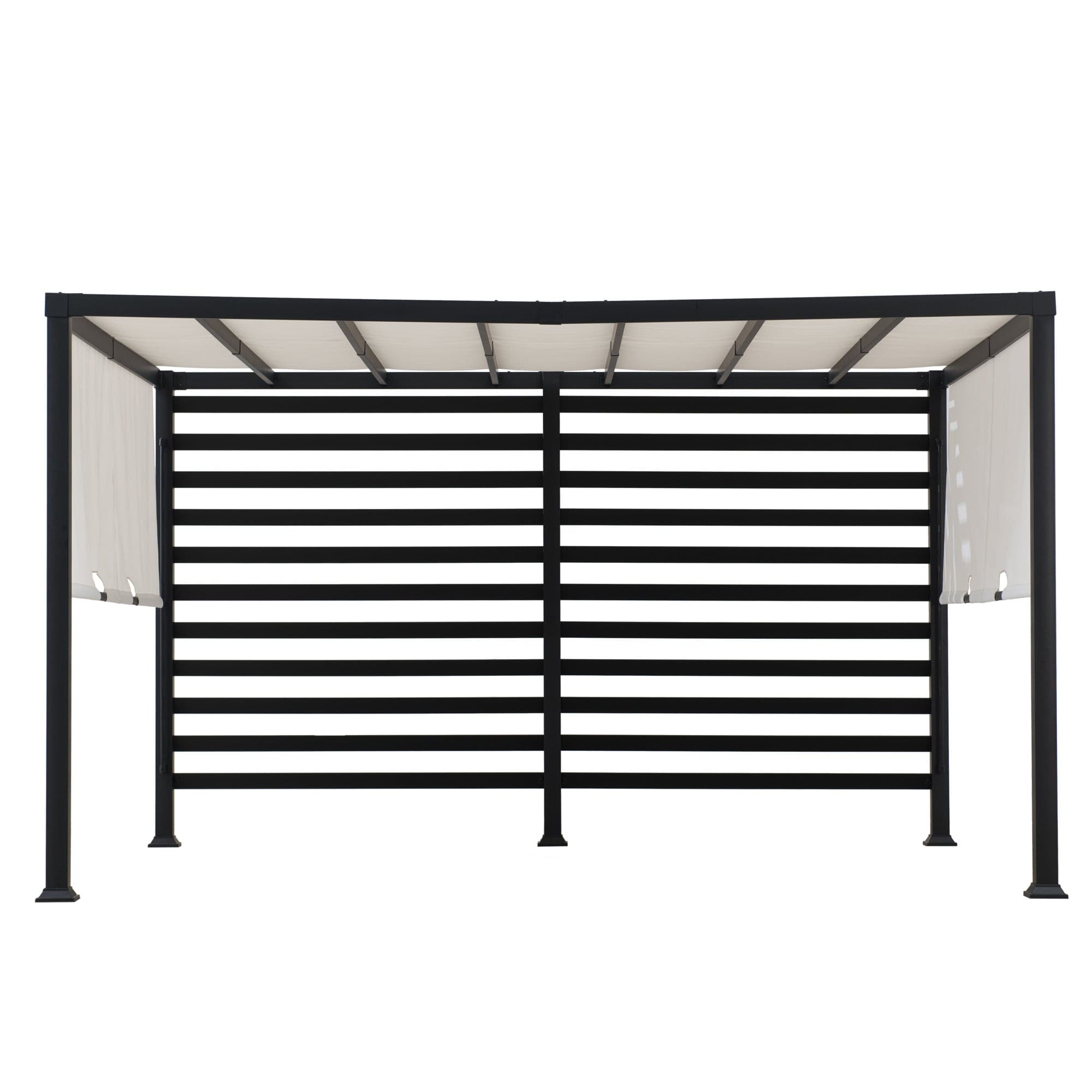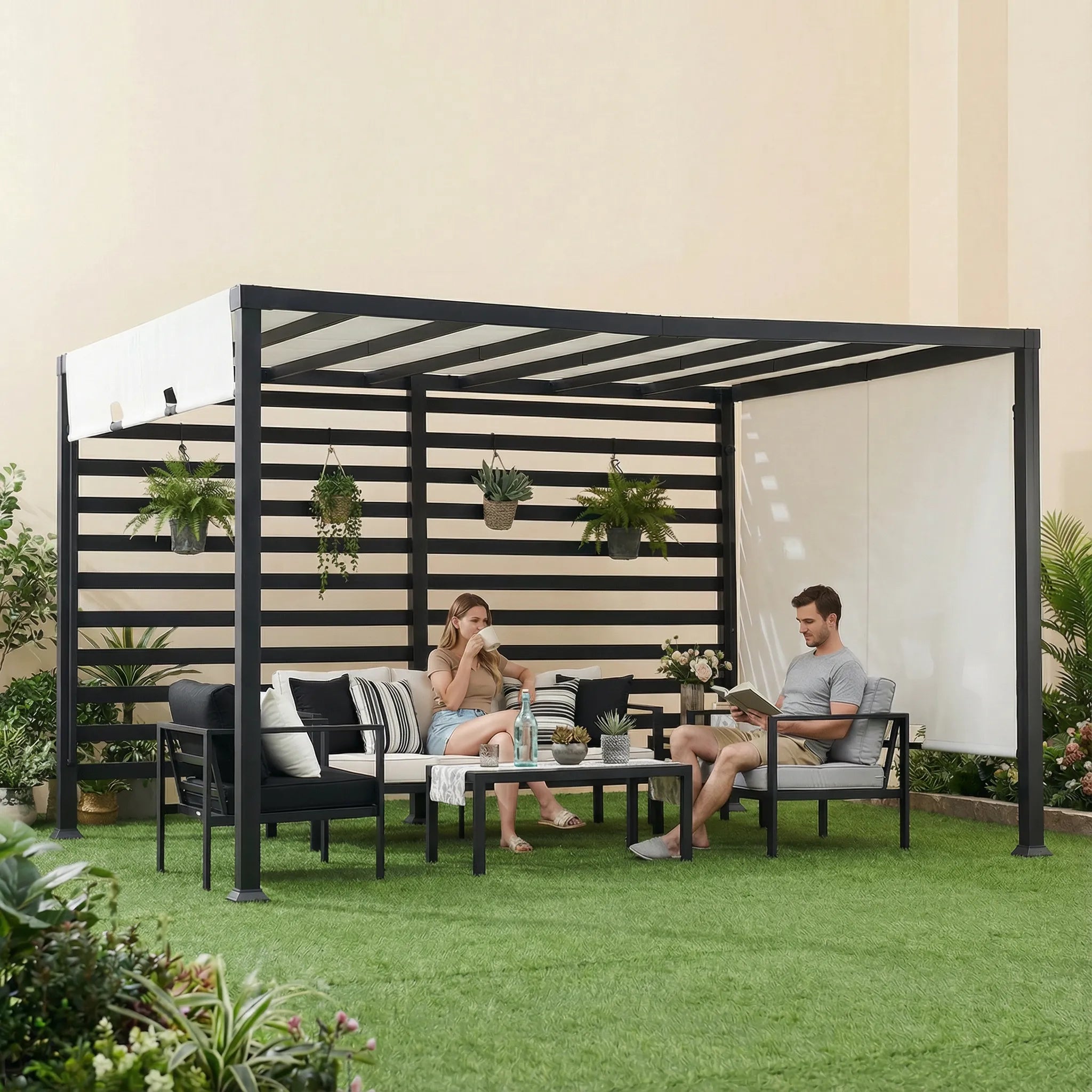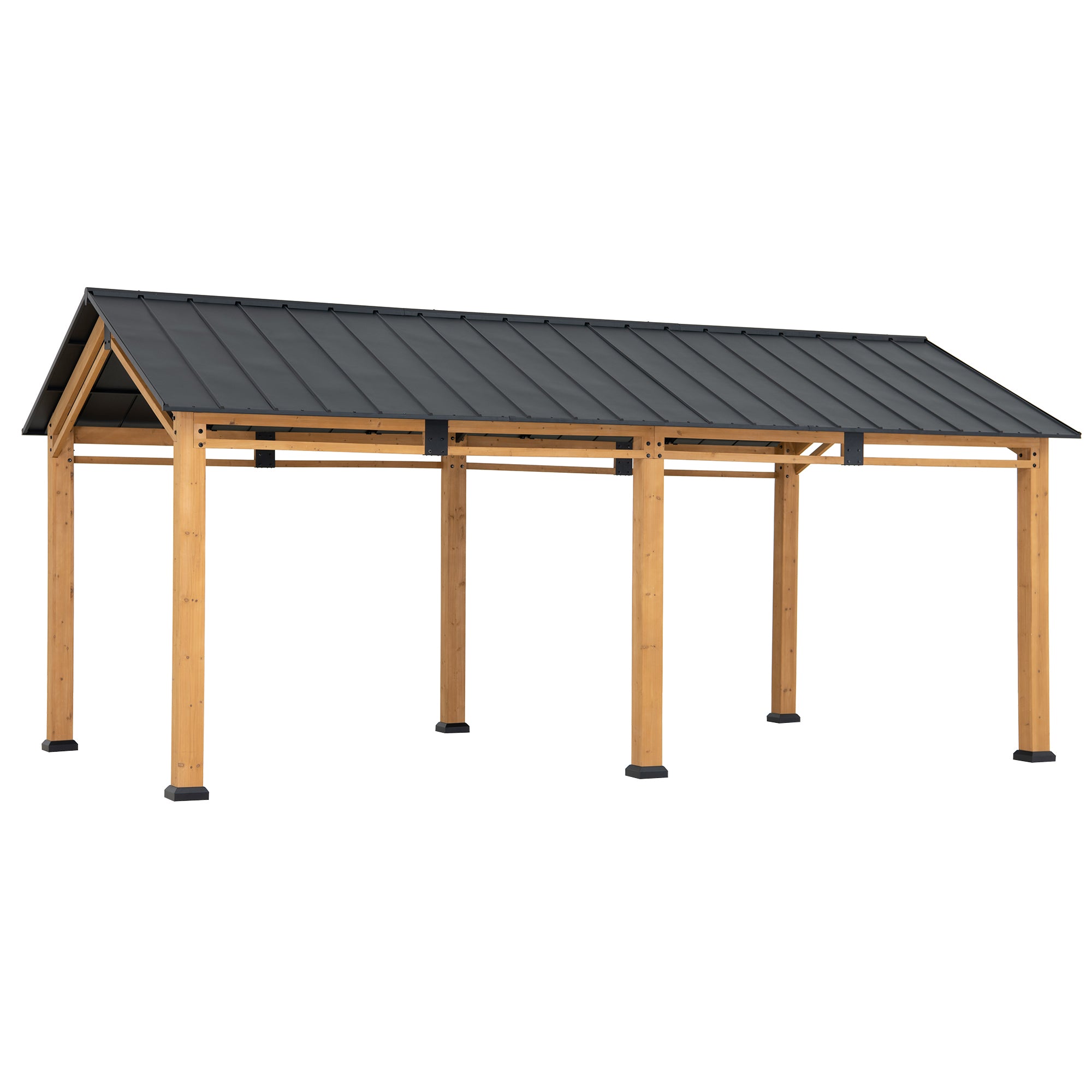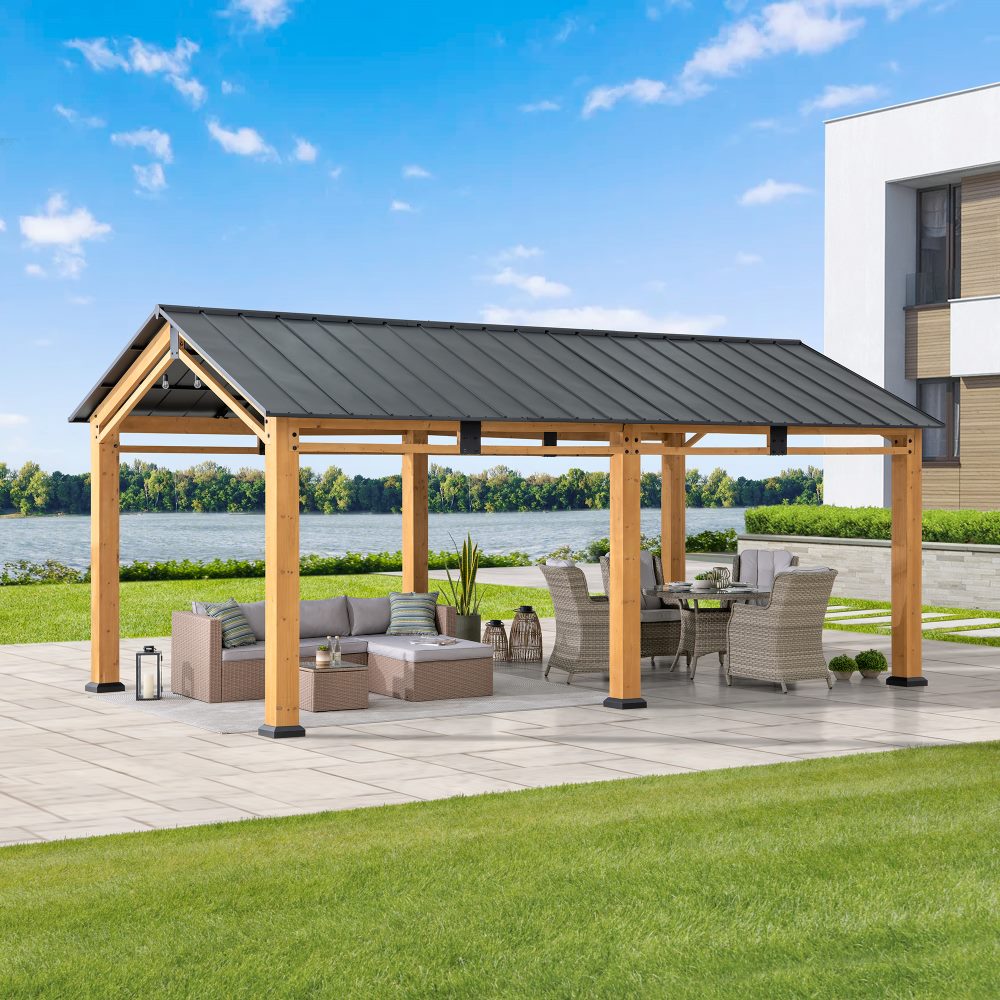
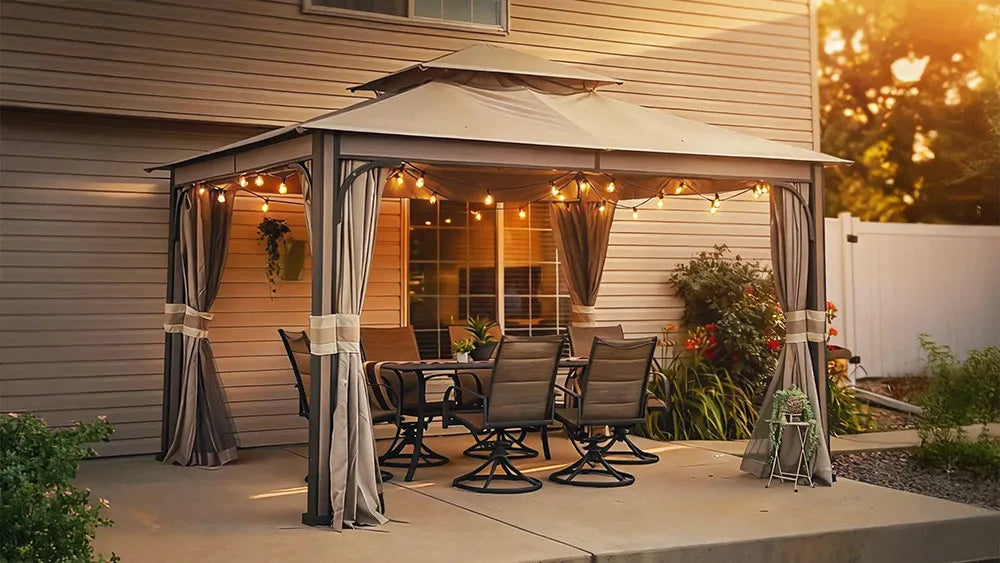
In Canada, outdoor living is shaped by distinct seasons, shifting weather patterns, and the simple desire to make the most of every warm or mild day. A gazebo often becomes the heart of the backyard—a place for dinners, quiet afternoons, small gatherings, or late-night conversations. But what truly transforms a gazebo from a simple structure into a versatile, comfortable outdoor room is not the frame itself—it’s the accessories.
Curtains, mosquito netting, and lighting each change how a gazebo feels and functions. Together, they contribute to comfort, privacy, warmth, seasonal adaptability, and aesthetic expression. When chosen thoughtfully, these accessories extend your outdoor season, protect you from pests and wind, and turn a standard gazebo into a personalized retreat tailored to the way you actually live.
This guide takes a deep dive into how each accessory works, why it matters, and how Canadian homeowners can select materials and install features that support year-round enjoyment—even with unpredictable weather. Think of this as a comprehensive upgrade manual for creating a gazebo that works for you.
1. Why Accessories Matter: Beyond Decoration
Accessories aren’t just add-ons—they redefine the function of your gazebo.
Curtains shape privacy and climate.
They turn open structures into intimate outdoor rooms for lounging, reading, dining, or hosting.
Netting shapes comfort and usability.
Mosquito-free evenings become possible, turning summer nights into something enjoyable instead of a battle against pests.
Lighting shapes atmosphere and safety.
The right lighting makes a gazebo usable after sunset and transforms the ambience from practical to magical.
Accessories let you adapt your gazebo to the season, the occasion, and your own preferences. Without them, a gazebo is simply a shaded structure. With them, it becomes a living space.
2. Curtains: Privacy, Wind Protection & Cozy Atmosphere
Curtains are often the most transformative accessory for a gazebo because they change both functionality and emotion of the space.
Curtains introduce softness, warmth, and dimension. At the same time, they solve practical problems such as wind exposure, street visibility, or temperature control.
Below are the key considerations Canadian homeowners should keep in mind.
A. Choosing the Right Fabric for Canadian Weather
1. Polyester Outdoor Fabric (Most Common)
Weather-resistant, durable, and easy to clean.
Great for rain, sun, wind, and everyday use.
2. Solution-Dyed Acrylic (Premium Choice)
Fade-resistant & durable through strong UV exposure.
Perfect for homeowners wanting long-lasting colour.
3. PVC-Coated Fabric (Weather-Blocking)
Ideal for windier or rain-prone regions.
Provides the strongest barrier among fabrics.
Winter vs Summer Use
-
In summer, breathable fabrics help maintain airflow.
-
In shoulder seasons (spring, fall), heavier curtains create warmth-retaining spaces.
Canadians often benefit from having dual sets—lightweight for summer, heavy-duty for colder months.
B. Single-Track vs Dual-Track Curtain Systems
A curtain’s performance depends on how it moves.
Single Track
-
Great for simple, lightweight curtains
-
Budget-friendly
-
Easy installation
But mobility becomes an issue when curtains overlap mosquito netting.
Dual Track (Best for Multi-Accessory Gazebos)
-
One track for netting
-
One track for curtains
-
Allows layering and independent movement
-
Creates a more structured, hotel-style outdoor room
For homeowners wanting both privacy and bug protection, dual tracks are the most functional choice.
C. Controlling Wind & Increasing Comfort
In Canada’s breezier regions—like coastal BC or prairie provinces—curtains provide meaningful wind management.
How Curtains Improve Comfort:
-
Block crosswinds
-
Reduce temperature drop in evening
-
Keep candles, fire pits (safe distance required), and décor stable
-
Reduce noise from surrounding areas
Best Practices:
-
Add curtain weights at the bottom hem
-
Use Velcro ties or magnetic fasteners
-
Choose slightly heavier fabrics for wind-prone areas
Wind control significantly extends your outdoor season.
D. Privacy: From Subtle to Full Protection
Curtains offer layers of privacy depending on the material:
-
Sheer curtains → soften visibility without blocking outdoors
-
Mid-weight curtains → limit visibility, ideal for urban homes
-
Opaque curtains → full privacy, great for evening gatherings
For many Canadians living in close-proximity housing, curtains transform a public backyard into a private oasis.
3. Mosquito Netting: Essential for Canadian Summers
Mosquitoes and blackflies can make even the nicest gazebo almost unusable in summer. Netting solves this problem elegantly—but quality matters.
A. Mesh Density Explained
Mesh density is measured in grams per square meter (gsm) or by threads per inch.
-
Low-Density Mesh: Blocks flies, not mosquitoes.
-
Mid-Density Mesh (≈35 gsm): Standard mosquito protection.
-
High-Density Mesh (>40 gsm): Better airflow control + no-see-um protection.
Canadian homeowners often benefit most from mid-to-high density mesh, especially in humid regions like Ontario or Quebec.
B. Full Enclosure vs Partial Netting
Full Enclosure Netting (Best for Mosquito Season)
Covers all openings and seals the entire interior.
Ideal for evening gatherings.
Panel-Style Netting
Individual net panels tie to posts.
Great for casual daytime use.
Magnetic Entry Netting
Allows quick walk-through access.
Much more convenient while carrying food or drinks.
C. Airflow Considerations in Canadian Heat
Mosquito netting affects airflow.
High-density nets block more bugs—but reduce wind.
How to optimize airflow:
-
Keep opposite panels partially open when possible
-
Choose netting with reinforced seams to prevent sagging
-
Use dual-track systems to shift netting independently
Airflow makes a major difference in hot summers.
D. Winter Storage & Maintenance
Mosquito netting should be removed for winter.
Why?
-
Snow load can tear netting
-
Ice stiffens fabric and weakens fibers
-
Wind causes wear on loose panels
Store netting in a dry place and clean it before spring reinstall.
4. Lighting: The Element That Defines Atmosphere
Good lighting doesn’t just illuminate a gazebo—it sculpts it.
Lighting determines how the space feels after sunset, whether it becomes:
-
A romantic dinner spot
-
A cozy lounge
-
A reading nook
-
A social gathering hub
-
A winter glow space
Below are the lighting elements Canadian homeowners should consider.
A. Layered Lighting: The Foundation of a Beautiful Gazebo
A well-lit gazebo uses three layers:
1. Ambient Lighting
Soft, general illumination like:
-
LED strips
-
String lights
-
Soft-diffused lanterns
Creates warm glow and visibility.
2. Task Lighting
Focused light for reading, dining, or board games.
Often achieved with:
-
Hanging pendants
-
Downward-facing spotlights
-
Table lanterns
3. Accent Lighting
Adds depth and mood:
-
Uplights on posts
-
Backlighting behind curtains
-
Warm glow on ceiling beams
Layering makes a gazebo feel “finished” and intentional.
B. Lighting for Canadian Winters
Winters affect lighting in several ways:
-
Outdoor lights must withstand freezing temperatures
-
Warm colour temperatures (2700K–3000K) feel cozier
-
Wiring should be insulated or solar-operated
-
LED efficiency shines in colder climates
Gazebos with curtains become even more inviting when lined with warm-toned lights reflecting on fabric textures.
C. Safety Considerations
Outdoor lighting should always be:
-
Weather-resistant (IP65 or higher for exposed areas)
-
Placed away from heaters
-
Installed with proper cable management
-
Secured against wind movement
For gazebos without built-in electricity, battery or solar solutions avoid extension-cord hazards.
D. Using Lighting to Extend Seasonal Enjoyment
Lighting dramatically extends how and when you use your gazebo:
-
Fall evenings stay comfortable with warm, low-level lighting
-
Winter enclosures feel magical with soft glow
-
Late-summer nights become relaxing retreats
-
Spring dinners remain visible and cozy
Lighting unlocks an entire second life for your gazebo.
5. Putting It All Together: How Curtains, Netting & Lighting Create a “Four-Season Gazebo”
When combined thoughtfully, accessories turn a simple structure into a dynamic, multi-season outdoor room.
Here’s how they complement each other:
Summer Setup
-
Netting deployed
-
Sheer curtains tied back
-
Soft string lighting for evening ambiance
-
Emphasis on airflow + mosquito protection
Fall Setup
-
Mid-weight curtains for wind management
-
Accent lighting for earlier sunsets
-
Occasional netting use
Winter Setup
-
Heavy curtains for warmth retention
-
Clear vinyl panels (optional)
-
Warm-toned lighting
-
Fire-safe heater placement*
Spring Setup
-
Mix of curtains/netting depending on bugs
-
Reintroduce bright lighting
-
Increase airflow with breeze-friendly netting
A gazebo becomes a year-round living space when accessories adapt seasonally.
6. Common Mistakes Canadian Homeowners Make—and How to Fix Them
❌ Mistake 1: Choosing curtains that are too light for windy areas
✅ Choose weighted hems or heavier fabrics.
❌ Mistake 2: Netting that sags or gaps at the bottom**
✅ Use bottom anchors, magnetic closures, or tension rods.
❌ Mistake 3: Lights hung too close to heat sources**
✅ Maintain distance, especially with propane heaters.
❌ Mistake 4: Not removing netting for winter**
✅ Store netting to avoid snow damage.
❌ Mistake 5: Using indoor lights outdoors**
✅ Choose IP-rated outdoor fixtures.
7. Final Thoughts: Accessories Turn a Gazebo Into a Living Space
A gazebo without accessories is simply a structure.
A gazebo with curtains, netting, and lighting becomes a place:
-
To gather with friends
-
To relax after work
-
To enjoy long summer nights
-
To host fall dinners
-
To watch the snow from a warm, protected retreat
Accessories adapt the gazebo to your life—not the other way around.
Whether your backyard faces thick summer insects, brisk fall winds, or long winter evenings, the right combination of curtains, netting, and lighting can create a versatile retreat that feels comfortable, private, and beautifully illuminated all year long.