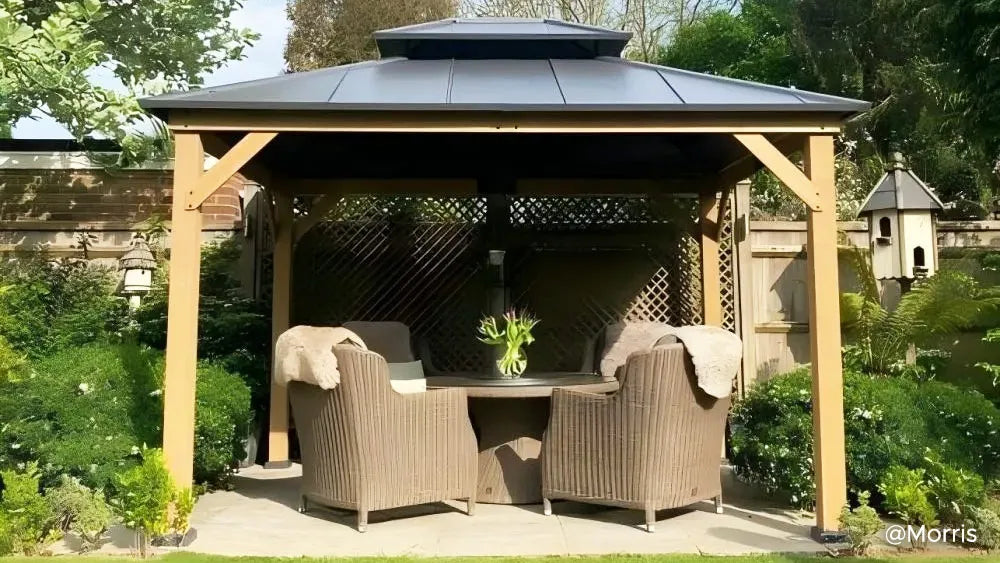
How Smart Structure Turns Limited Space into Everyday Living
Small backyards are common in Canadian cities and newer residential developments. Yet many homeowners treat limited space as a disadvantage—furnishing cautiously, avoiding upgrades, or leaving the yard underused.
In reality, small backyards don’t fail because of size. They fail because space is left undefined.
When everything competes for the same few square metres—seating, shade, warmth, storage—the yard feels crowded even when it’s empty. The solution isn’t to add more space, but to give existing space a clear role.
This guide explains how to design a small backyard so it feels open, comfortable, and genuinely useful throughout the year—using structure, scale, and multi-function design rather than decoration.
The Core Shift: From “Filling Space” to “Framing Space”
Most small backyard layouts start with furniture placement.
High-performing small backyards start with framing.
Framing means:
- Defining where activity happens
- Giving the eye a clear boundary
- Allowing open space to exist without feeling wasted
This is why compact gazebos and pergolas often outperform loose furniture in small yards—they frame space vertically, without consuming the floor.
The Anchor Rule: One Structure, One Clear Purpose
A small backyard should have one anchor element, not many.
An anchor:
- Organizes seating
- Creates visual calm
- Signals how the space is meant to be used
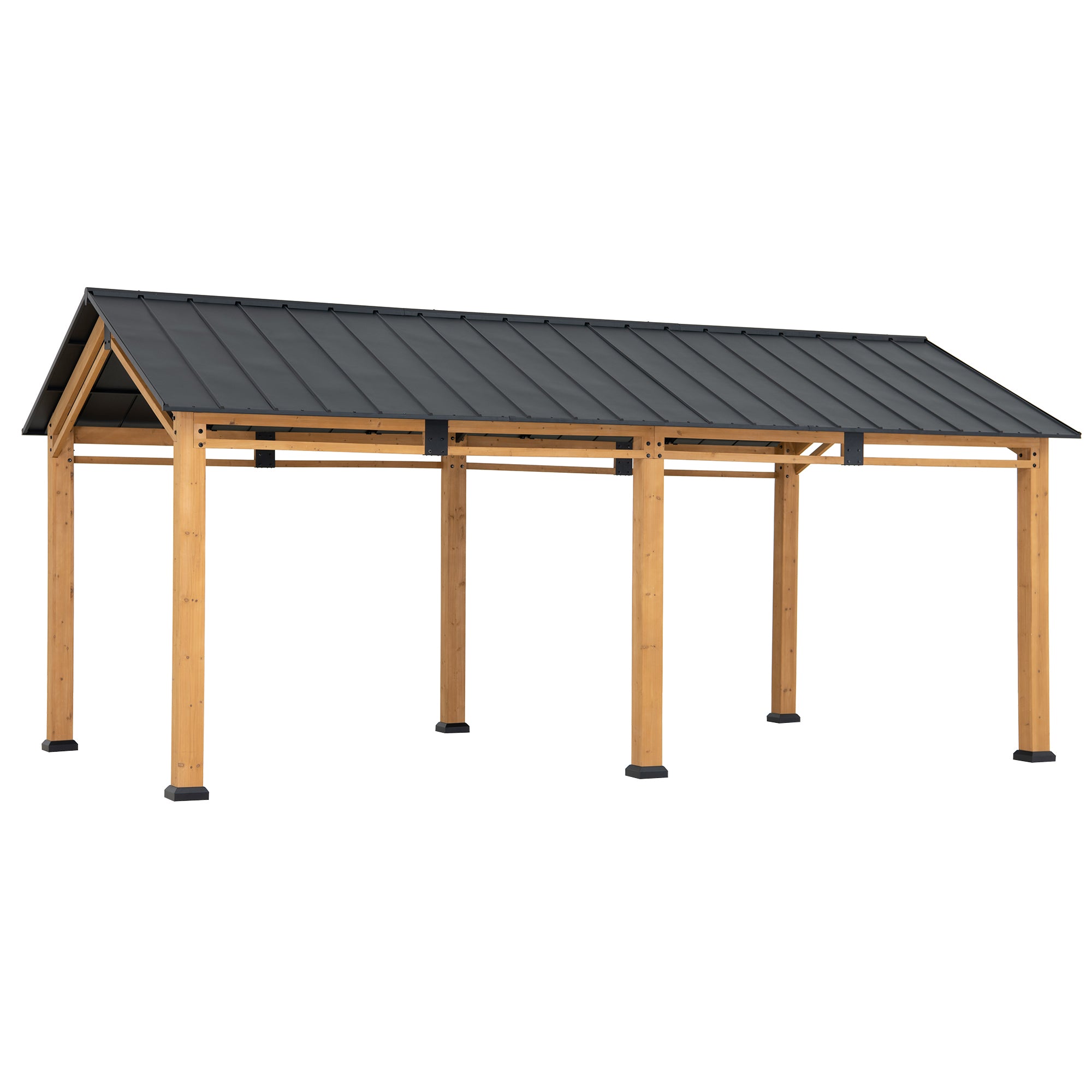
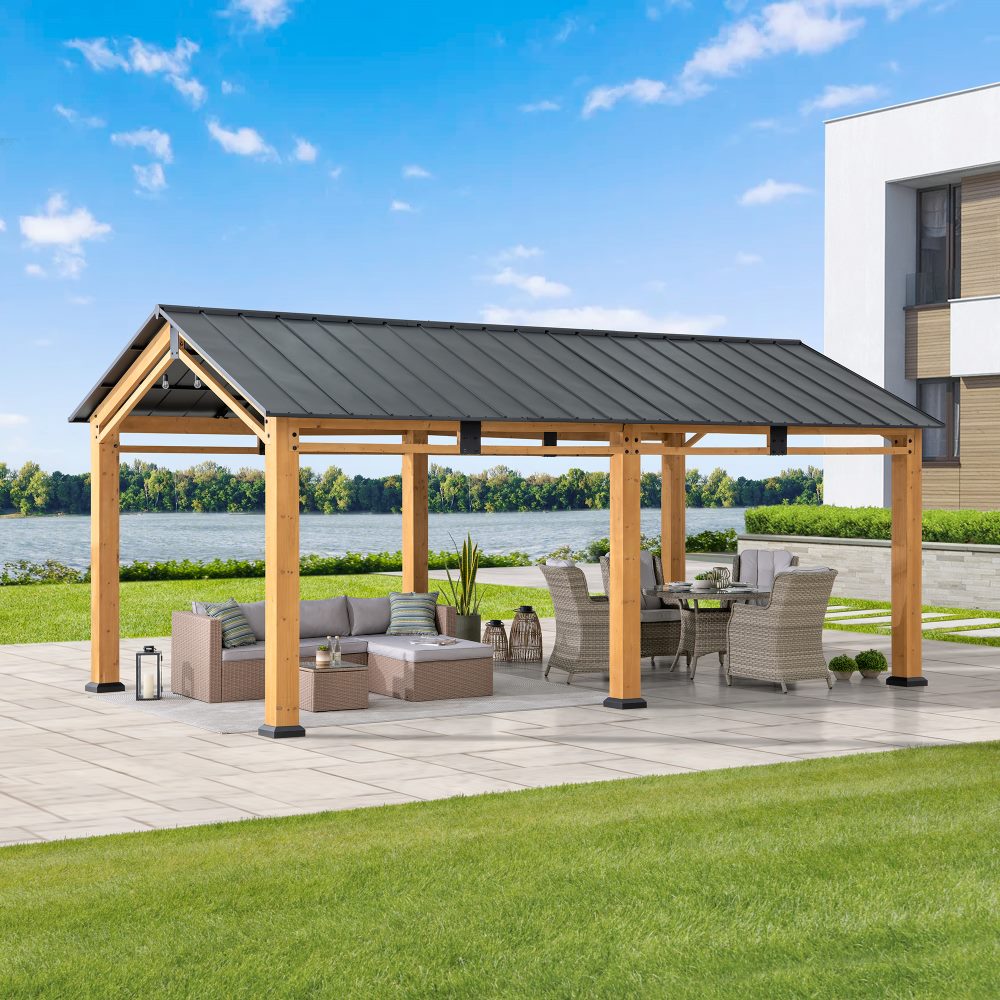
For example, a 9×9 cedar-framed hardtop gazebo with a steel roof and ceiling hook works exceptionally well as a dining or gathering anchor. Its compact footprint fits smaller yards, while the solid roof provides weather confidence across seasons.
Alternatively, a 10×10 hardtop gazebo with an aluminum frame, netting, and curtains adds flexibility—open when weather allows, enclosed when wind or insects become an issue.
The key is not size, but definition.
Why Overhead Coverage Makes Small Yards Feel Larger
It seems counterintuitive, but adding overhead structure often makes a small yard feel bigger.
Why?
The eye reads “room height” instead of surface area
Furniture no longer floats aimlessly
The ground stays visually clean
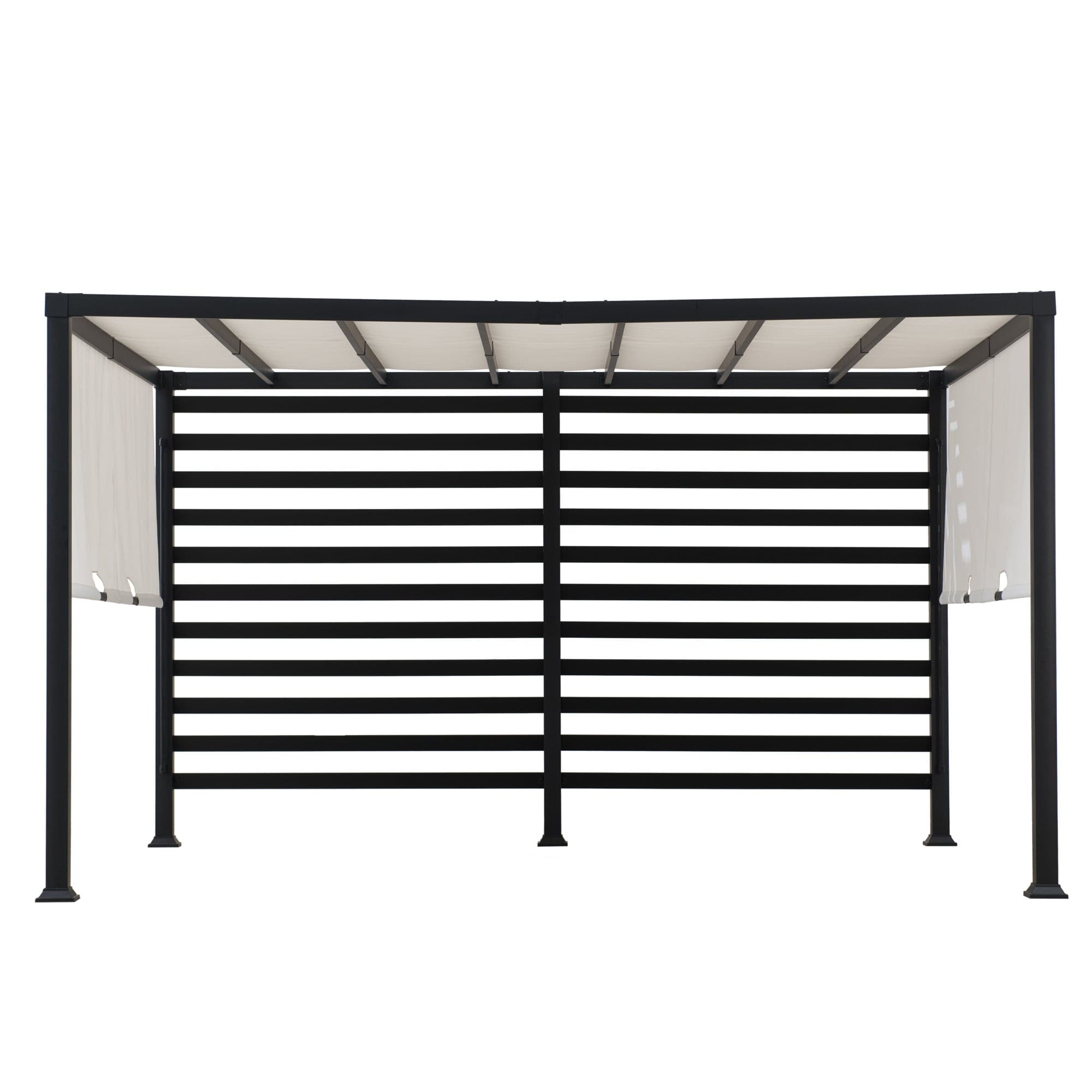
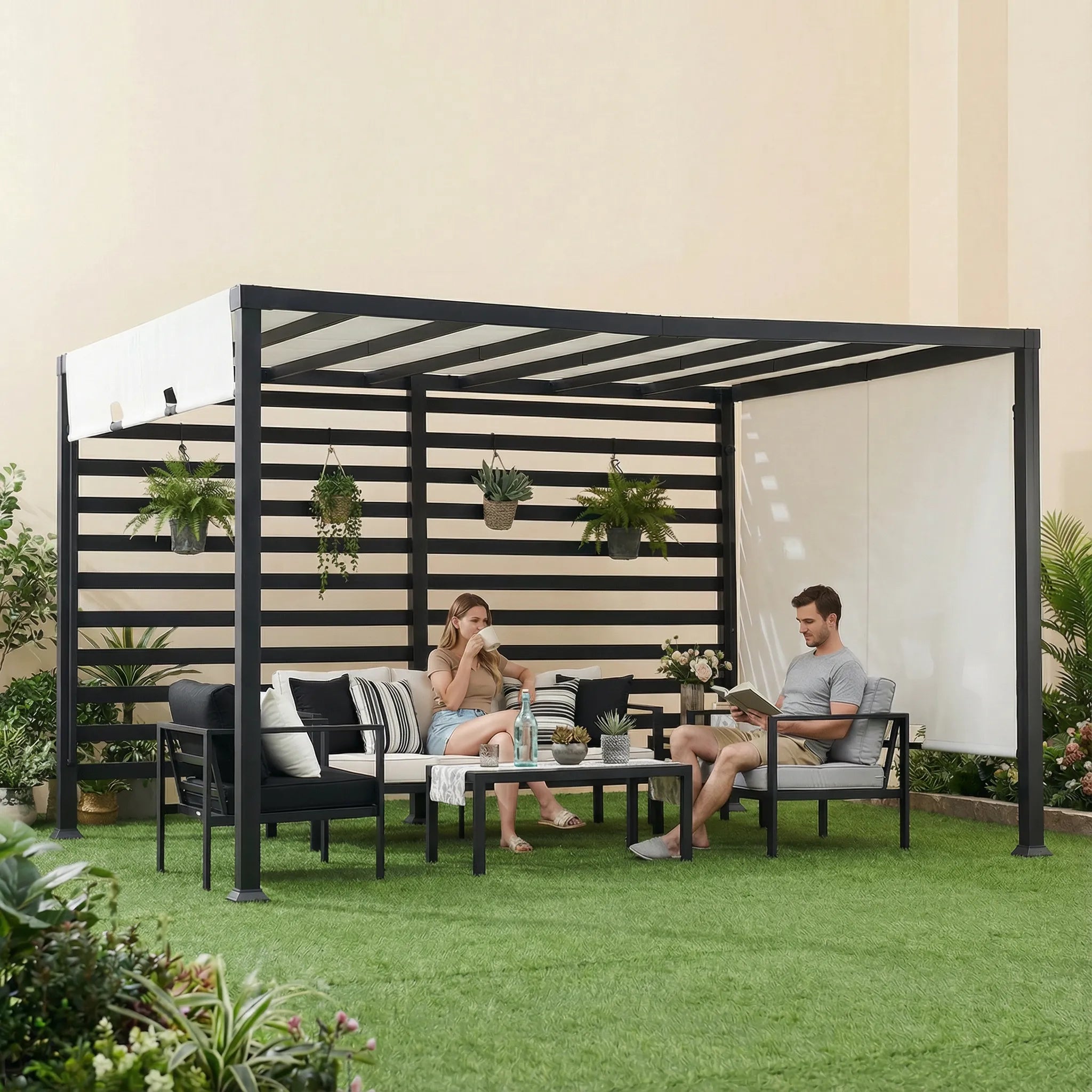
A 10×10 Darkeford metal pergola with a sling fabric canopy is a good example. It defines a seating zone without closing in the sides, preserving airflow and light while giving the space a sense of order.
Light Structures for Light Use: When a Soft Top Makes Sense
Not every small backyard needs a permanent structure.
For seasonal or flexible use, a 9×9 soft top garden gazebo with mosquito netting offers shade and insect control without visual heaviness. Its lighter profile suits yards that prioritize openness and easy seasonal adjustments.
Similarly, a 5×8 pop-up grill gazebo with a magnetic LED light and carrying bag supports outdoor cooking without claiming permanent real estate—ideal for small patios where every metre matters.
Vertical Thinking: Free the Floor, Use the Air
In small yards, vertical features are your best ally.
Overhead elements like:
- Ceiling hooks
- Hanging lights
- Compact canopies
reduce the need for bulky ground items. A gazebo or pergola with a ceiling hook allows lighting or décor to float above, keeping pathways clear and the space breathable.
This vertical strategy is what separates “cramped” from “intentional”.
Warmth Without Bulk: Fire Features That Don’t Overwhelm
Heating small spaces requires restraint.
Oversized fire features dominate visually and physically. Compact, well-placed fire pits deliver warmth without stealing space.
A 26-inch wood-burning outdoor fire pit with PVC cover works well as a subtle focal point near sheltered seating.
An 18-inch steel fire pit with lid and fire poker is even more discreet, perfect for intimate layouts where flexibility matters.
Placed near a gazebo or pergola, these fire pits extend use into cooler evenings without cluttering the yard.
Seating That Moves With the Space
Small backyards benefit from seating that adapts.
A metal frame swivel egg cuddle chair with cushions adds comfort and personality without requiring multiple chairs. Its rounded form softens tight corners and creates a natural pause point—ideal for reading, relaxing, or quiet evenings.
Because it functions as both seating and visual accent, it replaces several smaller items, keeping the layout simple.
The Wind Factor: Why Comfort Isn’t About Temperature
In Canadian backyards, wind—not cold—is what ends outdoor time early.
Small yards amplify wind because there’s nowhere for it to dissipate. Partial barriers, overhead coverage, and curtains or netting reduce airflow just enough to make a dramatic difference.
This is why gazebos with optional netting or curtains perform so well in compact spaces—they control comfort without sealing the yard shut.
Lighting as a Space Multiplier
Poor lighting flattens small yards. Thoughtful lighting adds depth.
Effective strategies include:
- Overhead lighting under a gazebo or pergola
- Warm, focused light near seating
- Avoiding perimeter floodlights
A small yard doesn’t need to be bright—it needs to be inviting.
The Weeknight Test: Does the Yard Invite Daily Use?
A simple way to judge success:
Would you step into this backyard on a random weeknight?
If the answer is yes—just to sit, warm up, or unwind—the design works.
If it only works for guests or special occasions, the layout is doing too much and supporting too little.
How SUNJOY Fits Small Backyard Design
SUNJOY’s strength in small-backyard scenarios comes from:
- Compact structure sizing
- Multi-function features (hooks, netting, lighting compatibility)
- Designs that scale down without losing purpose
Rather than dominating space, these products organize it, which is exactly what limited backyards need.
Final Thought: Small Backyards Thrive on Clarity, Not Size
A small backyard doesn’t need more furniture, more décor, or more coverage.
It needs:
- One clear anchor
- Vertical structure instead of floor clutter
- Flexible features that adapt to weather and daily life
When space is framed instead of filled, even the smallest yard can feel calm, open, and genuinely useful.
In the end, good small-backyard design isn’t about making space bigger—it’s about making it work better.